If you are interested in products and services related to the research phase in this field, please contact for further inquiries.
The field of rehabilitation has long been in need of innovative solutions to enhance the recovery process for individuals with mobility impairments. Traditional methods, while effective to a certain extent, often fall short in providing comprehensive and personalized care. The advent of machine learning and advanced sensor technologies has opened new horizons, allowing for more precise and tailored rehabilitation strategies. Among these advancements, the sensorized crutch tip stands out as a transformative tool, leveraging machine learning algorithms to classify and monitor physical activities, thereby revolutionizing the way we approach rehabilitation.
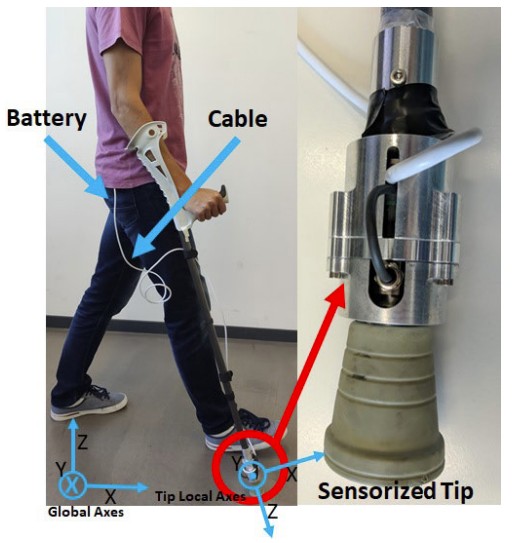 Fig.1 Sensorized Tip to Capture Gait Data. (Mesanza A. B., et al., 2020)
The Sensorized Crutch Tip: A Technological Breakthrough
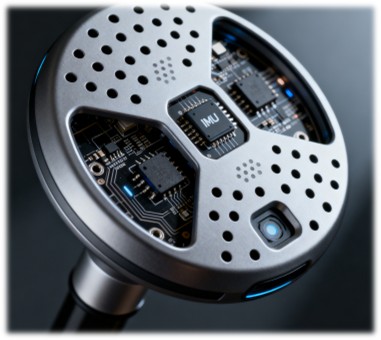
The sensorized crutch tip represents a significant leap forward in assistive devices for walking. Unlike conventional crutches, which offer basic support, this advanced device integrates a suite of sophisticated sensors designed to capture detailed data on physical activities. These sensors include a 9-degree-of-freedom Inertial Measurement Unit (IMU), which provides linear acceleration, angular speed, and magnetic field data, essential for understanding the dynamics of movement. Additionally, the device incorporates a Kalman filter-based algorithm to estimate roll, pitch, and yaw Euler angles, offering precise orientation measurements. A barometer and a piezoelectric force sensor further enhance the data capture capabilities, providing atmospheric pressure and axial load measurements, respectively.
The integration of these sensors into a single, compact device allows for the collection of a wide range of data, which can be analyzed to gain insights into the user's physical activities. This data is crucial for developing personalized rehabilitation programs, as it provides a detailed picture of how the user interacts with their assistive device in real-world scenarios.
Machine Learning: The Key to Personalized Rehabilitation
Machine learning algorithms play a pivotal role in transforming raw sensor data into actionable insights. By analyzing the data captured by the sensorized crutch tip, machine learning models can classify various physical activities, such as walking at different speeds, standing still, and navigating stairs. This classification is achieved through a multi-step process that involves feature extraction, feature selection, and classifier training.
Feature Extraction and Selection
The initial step in this process involves extracting relevant features from the raw sensor data. These features, which can include statistical metrics, motion-based parameters, and time-based measurements, are derived from the 17 data sources provided by the sensorized crutch tip. The resulting set of 176 potential features forms the basis for subsequent analysis.
However, not all features are equally important for accurate classification. To optimize the classifier design, a Random Forest approach is employed to evaluate the relative significance of each feature. This method, which involves generating a large set of decision trees, allows for the identification of the most relevant features, thereby reducing the dimensionality of the problem and improving computational efficiency.
Classifier Training and Evaluation
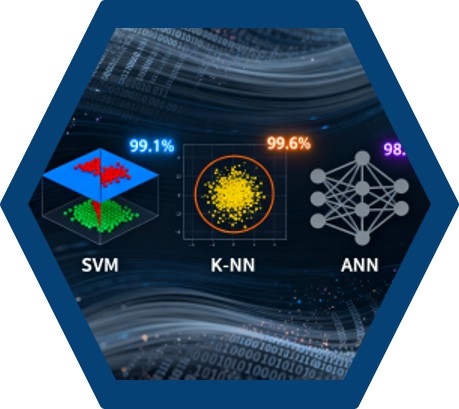
Once the most relevant features have been identified, they are used to train machine learning classifiers. In this study, three classifiers were evaluated: Support Vector Machine (SVM), K-Nearest Neighbor (K-NN), and Artificial Neural Network (ANN). Each classifier was trained using a balanced dataset, ensuring that each type of physical activity was represented with equal importance.
The classifiers were then tested on a separate dataset to evaluate their performance. The results demonstrated that with proper feature selection, high success rates could be achieved. For instance, the SVM classifier achieved a maximum success rate of 99.1% with 87 features, while the ANN classifier reached 99.6% with 174 features. The K-NN classifier also performed well, achieving a success rate of 98.4% with 66 features.
These findings highlight the importance of feature selection in designing effective physical activity classifiers. By focusing on the most relevant features, the classifiers were able to achieve high accuracy with fewer inputs, reducing computational costs and improving overall performance.
Practical Implications and Future Directions
The development of this machine learning-based approach to physical activity classification using a sensorized crutch tip has significant practical implications for rehabilitation. By providing real-time data on a patient's daily activities, therapists can gain deeper insights into the patient's functional status and tailor rehabilitation programs accordingly. This personalized approach can lead to more effective and efficient recovery processes, ultimately improving the quality of life for individuals with lower-limb impairments.
However, this research is only the beginning. Future work will focus on expanding the range of physical activities that can be classified, including activities such as walking on slopes and varying speeds. Additionally, the classifier's performance will be tested on specific populations of patients who require assistive devices for walking, ensuring its applicability in real-world scenarios. Further refinements and validations will be necessary to fully realize the potential of this innovative approach in clinical settings.
Conclusion
The integration of machine learning and sensor technology in rehabilitation represents a significant leap forward in personalized healthcare. The sensorized crutch tip, coupled with advanced machine learning algorithms, offers a powerful tool for monitoring and classifying physical activities in individuals with lower-limb impairments. By optimizing feature selection and utilizing robust classifiers, this research has demonstrated the feasibility and effectiveness of this approach. As we continue to explore and refine these technologies, the future of rehabilitation looks increasingly promising, with the potential to transform the lives of countless individuals in need of mobility support.
If you have related needs, please feel free to contact us for more information or product support.
Reference
- Mesanza, Asier Brull, et al. "A machine learning approach to perform physical activity classification using a sensorized crutch tip." IEEE Access 8 (2020): 210023-210034.
This article is for research use only. Do not use in any diagnostic or therapeutic application.
Crutches Series