Intelligent Crutches: A Leap Forward in Rehabilitation Technology
If you are interested in products and services related to the research phase in this field, please contact for further inquiries.
Intelligent crutches represent a significant advancement in the field of medical rehabilitation devices. Traditional crutches have long been a staple for individuals recovering from injuries or surgeries, but their functionality has remained relatively unchanged for decades. The introduction of intelligent crutches, equipped with advanced sensors and feedback mechanisms, aims to enhance user experience, improve recovery rates, and reduce the risk of secondary injuries. By integrating force-sensitive resistors (FSRs) and accelerometers, these crutches provide real-time monitoring and feedback, ensuring proper usage and accelerating the healing process.
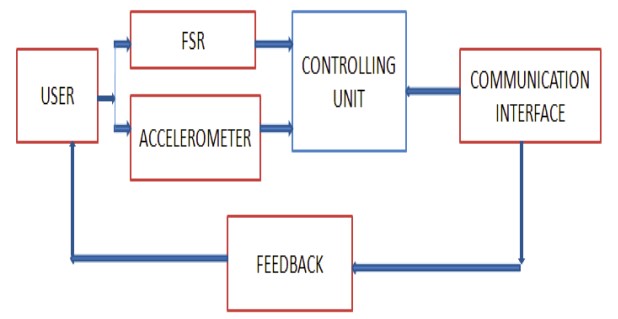 Fig.1 System architecture of intelligent crutches. (Megalingam R. K., et al., 2019)
The Need for Enhanced Rehabilitation Devices
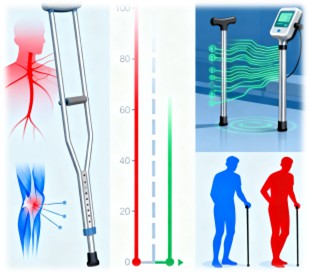
Rehabilitation from physical injuries often requires the use of crutches to support mobility and reduce strain on affected limbs. However, improper use of traditional crutches can lead to complications such as nerve compression, muscle strain, and prolonged recovery times. Studies have shown that incorrect usage of crutches can significantly delay the healing process, often resulting in extended rehabilitation periods. The development of intelligent crutches addresses these issues by providing users with immediate feedback on their crutch usage, ensuring adherence to safe and effective rehabilitation practices.
System Architecture of Intelligent Crutches
The intelligent crutch system is designed to monitor and provide feedback on two critical parameters: force and acceleration. The system comprises several key components:
- Control Unit: The control unit is powered by an Arduino Uno microcontroller, which collects data from the sensors, compares it with reference values, and provides audio feedback to the user. The Arduino is powered by a 5V supply and is connected to the sensors and the audio output system.
- Force Sensor: The force-sensitive resistor (FSR) measures the force applied to the crutch. One end of the FSR is connected to the 5V pin of the Arduino, while the other end is connected to the A0 pin and grounded via a 10K resistor. The FSR readings can be monitored in real-time via the Arduino's serial monitor.
- Accelerometer: The accelerometer (ADXL 3xx) measures motion in three axes (X, Y, Z). The X, Y, and Z pins of the accelerometer are connected to the A3, A2, and A1 pins of the Arduino, respectively. The ST pin is connected to A0, Vcc to A5, and the ground to A4. The accelerometer readings can also be monitored via the Arduino's serial monitor.
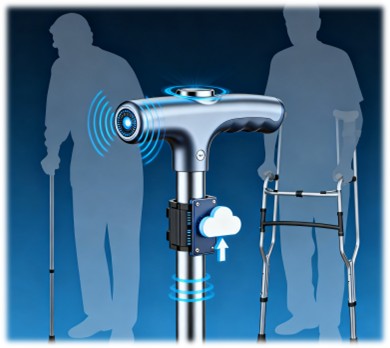
- Communication Interface: The communication interface allows the crutch to send data to external devices, such as a PC or a mobile app, for further analysis and monitoring. This can be achieved using a Bluetooth module or other wireless communication technologies.
- User Feedback System: The user feedback system consists of headsets connected to the D3 pin of the Arduino. The system is designed to provide audible feedback to the user whenever the measured force or acceleration exceeds the safe limits.
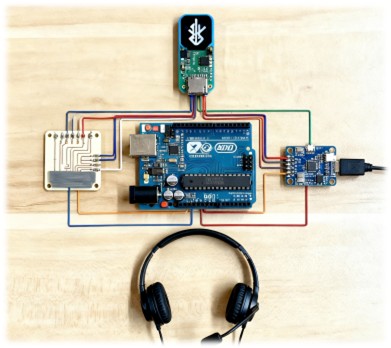
Flowchart of the Control System
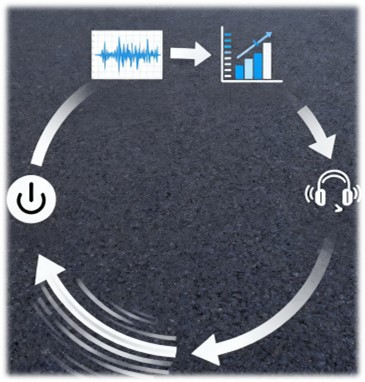
The flowchart of the control system outlines the working of the intelligent crutch:
- Start: The system is activated, and the sensors begin to collect data.
- Get Force and Speed: The FSR and accelerometer measure the force and acceleration, respectively.
- Compare with Prescribed Values: The measured values are compared with the safe limits stored in the controller.
- Inform User: If the measured values exceed the safe limits, the user is notified via the headsets with audio feedback such as "Balance Your Weight" or "Slow Down."
Results and Validation
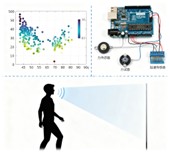
The intelligent crutch was tested on ten individuals with varying weights, ranging from 45kg to 90kg. The force exerted by each individual on the crutch and their corresponding acceleration were measured and plotted using Matlab. The results showed that the allowable force and acceleration varied with the individual's weight. The maximum allowable force and acceleration decreased as the weight of the individual increased.
The Arduino coding was used to collect sensor data and compare it with the reference values. The crutch was tested for its functionality, and the results were analyzed. The users were able to hear the audio notifications when they exceeded the safe limits, confirming the effectiveness of the system.
Future Developments and Enhancements
The current design of intelligent crutches can be further enhanced to cater to a broader range of users. For instance, the incorporation of ultrasound or infrared sensors can enable the crutch to detect obstacles, making it suitable for visually impaired individuals. Additionally, the integration of a memory module and communication module can allow the crutch to send usage data to healthcare providers, enabling remote monitoring and personalized rehabilitation guidance.
The same design principles can be extended to other types of crutches, such as canes, auxiliary crutches, and gutter crutches. The audio feedback system can also be replaced with a visual display to provide users with real-time data on their movements and force application.
Conclusion
The development of intelligent crutches represents a significant leap forward in medical rehabilitation technology. By incorporating advanced sensors and feedback mechanisms, these crutches ensure proper usage, accelerate recovery, and reduce the strain on patients. The main advantages of this design include low power consumption, self-monitoring capabilities, cost-effectiveness, and user-friendliness. The intelligent crutch system has been successfully tested and validated, confirming its potential to revolutionize rehabilitation practices.
If you have related needs, please feel free to contact us for more information or product support.
Reference
- Megalingam, Rajesh Kannan, M. G. Greeshma, and Soumya S. Pillai. "Design and implementation of intelligent crutches for medical applications." 2019 International Conference on Communication and Signal Processing (ICCSP). IEEE, 2019.
This article is for research use only. Do not use in any diagnostic or therapeutic application.
Crutches Series