If you are interested in products and services related to the research phase in this field, please contact for further inquiries.
Lower-limb exoskeletons represent a significant leap in wearable robotics, offering enhanced mobility and independence to individuals with mobility impairments. These devices, which can be categorized into medical and non-medical applications, have garnered substantial attention due to their potential to revolutionize rehabilitation, support aging populations, and augment physical capabilities in various settings. As the global population ages and the demand for assistive technologies grows, the development and commercialization of lower-limb exoskeletons are becoming increasingly crucial.
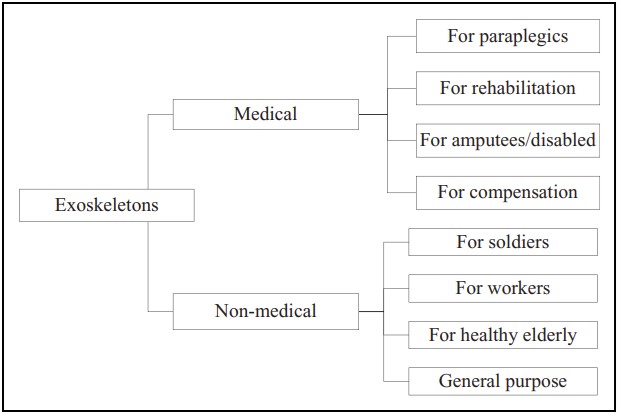 Fig.1 Classification of exoskeletons with respect to end users. (Rupal B. S., et al., 2017)
Evolution of Lower-Limb Exoskeletons
The journey of lower-limb exoskeletons began in the 1960s with early efforts focusing on load augmentation and rehabilitation systems. Since then, significant advancements have been made, driven by the need for more effective and user-friendly devices. Modern exoskeletons incorporate advanced materials, sophisticated control systems, and improved actuation mechanisms, making them more efficient and accessible. For instance, the ReWalk exoskeleton, which uses DC motors and a wristwatch-style controller, has been designed to assist individuals with spinal cord injuries in performing daily activities with greater autonomy.
Medical Applications: Rehabilitation and Mobility Support
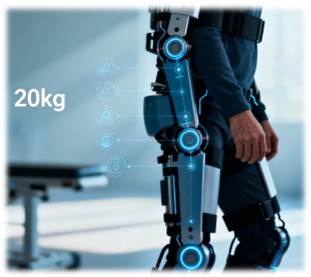
In the medical domain, lower-limb exoskeletons play a pivotal role in rehabilitation and mobility support. Devices like the Ekso Bionics and Indego exoskeletons have been developed to assist patients with spinal cord injuries and other mobility-limiting conditions. These medical exoskeletons often require specialized medical professionals for deployment and use, ensuring maximum clinical benefit. For example, the Ekso Bionics exoskeleton, weighing 20 kg and offering six degrees of freedom (DOF), has been designed to provide adjustable assistance levels, making it suitable for a wide range of patients.
Non-Medical Applications: Enhancing Physical Capabilities
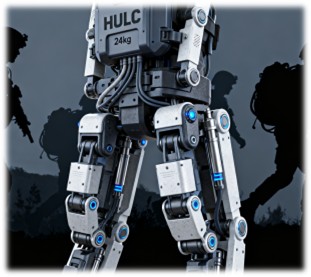
Beyond medical applications, lower-limb exoskeletons have found utility in various non-medical fields. For soldiers, exoskeletons like the HULC and BLEEX have been developed to enhance load-carrying capabilities and endurance. In industrial settings, exoskeletons assist workers in performing physically demanding tasks, reducing the risk of injury and fatigue. For instance, the HULC exoskeleton, weighing 24 kg and offering seven DOF, has been designed to allow soldiers to carry heavy loads over long distances without significant fatigue.
Key Issues and Differences: Medical vs. Non-Medical Exoskeletons
The primary distinction between medical and non-medical exoskeletons lies in their intended use and regulatory requirements. Medical exoskeletons are designed to provide mobility to individuals with limited or lost functionality, often requiring specialized medical supervision. In contrast, non-medical exoskeletons focus on augmenting the physical capabilities of healthy individuals, emphasizing ease of use and natural interfaces. For example, the BLEEX exoskeleton, weighing 14 kg and offering seven DOF, has been designed for non-medical applications, prioritizing user-friendly interfaces and long battery life.
User Interaction and Control Strategies
Effective user interaction and control strategies are crucial for the success of lower-limb exoskeletons. Medical exoskeletons often employ complex sensing and actuation systems to cater to the specific needs of patients. Non-medical exoskeletons, on the other hand, prioritize intuitive user interfaces that allow lay users to operate the devices with ease. For instance, the Indego exoskeleton uses DC brushless motors and a wireless operation system, making it easy for users to don, operate, and doff the device.
Regulatory Challenges and Safety Standards
The commercialization of lower-limb exoskeletons hinges on compliance with international safety standards. For medical exoskeletons, regulations such as the IEC 80601-2-78 are being developed to ensure basic safety and essential performance. Non-medical exoskeletons, classified as personal care robots, must adhere to standards like ISO 13482, which address close human-robot interactions. Ensuring the safety of exoskeletons involves rigorous risk management processes, including identifying potential hazards, implementing risk reduction measures, and conducting thorough testing and validation.
Case Study: Assistive Mobility Exoskeletons for Elderly Persons
The EXO-LEGS project, funded under the AAL Call 4, aimed to develop mobility exoskeletons for elderly persons. By engaging end-users in the design and testing process, the project focused on creating user-centric solutions that address the specific mobility needs of the elderly. The basic EXO-LEGS model, designed to provide 30% support in the sagittal plane, underwent rigorous testing and validation, demonstrating its potential for enhancing independent living.
- User Feedback and Commercialization
End-user feedback highlighted key preferences such as ease of use, comfort, and long battery life. The project also explored commercialization strategies, with users expressing a preference for certified safe exoskeletons, rental options, and insurance schemes. These insights are invaluable for the future development and market adoption of assistive exoskeletons.
Challenges and Future Trends
Despite significant progress, several challenges remain in the development and commercialization of lower-limb exoskeletons. Developing lighter, more compact actuators, improving control strategies, and enhancing battery technology are critical for the widespread adoption of these devices. Additionally, advancements in materials science and energy harvesting techniques can further optimize the performance and efficiency of exoskeletons.
Technological Advancements
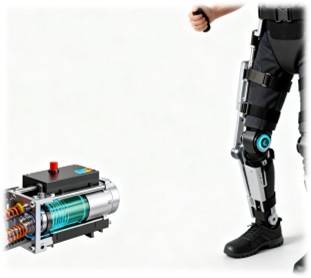
Future advancements in lower-limb exoskeletons will focus on improving actuation mechanisms, control strategies, and battery life. For instance, series elastic actuators could be developed to provide high torques at required speeds without the need for expensive harmonic drives. Additionally, custom-made motors and mechanical transmission systems can enhance the overall efficiency and performance of exoskeletons.
User-Centric Design
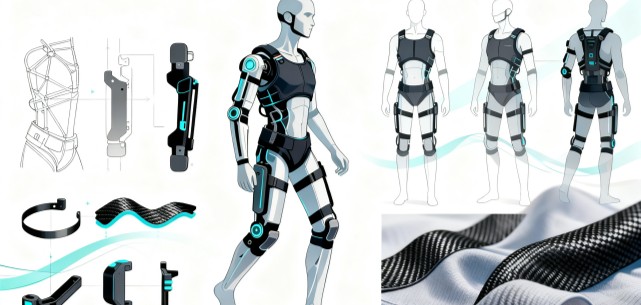
User-centric design will be a key focus area, ensuring that exoskeletons are flexible, adaptable, and seamlessly integrated with human movements. Soft exoskeletons and modular designs offer promising avenues for achieving these goals. Moreover, advanced materials such as carbon fiber and flexible textile fabrics can significantly enhance the overall user experience.
Market Adoption and Affordability
The high cost of exoskeletons remains a significant barrier to market adoption. Reducing prices by developing cheaper components and optimizing manufacturing processes is essential for making these technologies accessible to a broader audience. Additionally, fostering public-private partnerships and government support can accelerate the commercialization of exoskeletons.
Conclusion
Lower-limb exoskeletons represent a transformative technology with the potential to enhance mobility, independence, and quality of life for millions of people. By addressing the diverse needs of medical and non-medical applications, researchers and developers are paving the way for a future where exoskeletons are an integral part of our daily lives. As we navigate the challenges and embrace the future trends, the journey towards fully effective, affordable, and user-friendly exoskeletons continues. The promise of a more mobile and independent society is within reach, driven by the relentless pursuit of innovation in wearable robotics.
If you have related needs, please feel free to contact us for more information or product support.
Reference
- Rupal, Baltej Singh, et al. "Lower-limb exoskeletons: Research trends and regulatory guidelines in medical and non-medical applications." International Journal of Advanced Robotic Systems 14.6 (2017): 1729881417743554.
This article is for research use only. Do not use in any diagnostic or therapeutic application.
Lower Limb Fixation Series