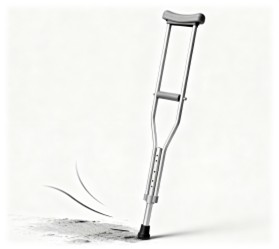
If you are interested in products and services related to the research phase in this field, please contact for further inquiries.
The advent of augmented crutches marks a pivotal moment in the evolution of assistive technology, offering a transformative solution for individuals navigating mobility challenges. This innovation leverages digital augmentation to enhance traditional crutch usage, providing users with real-time visual cues and interactive feedback. By addressing common difficulties such as positioning and coordination, augmented crutches empower users to walk more confidently and effectively, ultimately improving rehabilitation outcomes.
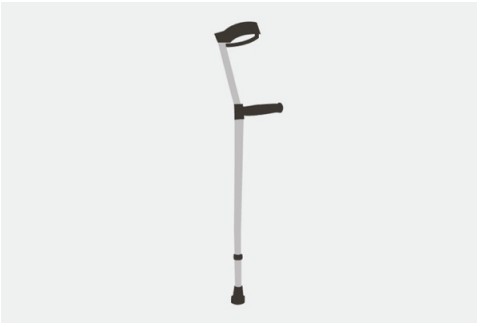 Fig.1 Forearm Crutches. (Peres B., et al., 2019)
The Science of Augmented Crutches: A Comprehensive Overview
Understanding the Challenges of Crutch Mobility
Walking with crutches is a complex skill that demands precise coordination and continuous practice. Incorrect use can lead to falls, injuries, and a lack of confidence. Traditional methods often rely on physical therapists for guidance, but constant access to a therapist is not always practical. This gap in support can hinder the learning process and lead to the development of improper techniques. Augmented crutches address these challenges by providing a portable, interactive solution that enhances the learning experience.
The Role of Persuasive Technology in Rehabilitation
Persuasive technology is designed to influence user behavior through motivational and interactive elements. In the context of physical rehabilitation, these technologies can significantly enhance the learning process by providing continuous feedback and support. Augmented crutches integrate persuasive elements such as timed visual cues and motivational messages, creating an engaging and effective training experience. This approach not only improves user engagement but also fosters a sense of accomplishment and self-confidence.
The Design and Functionality of Augmented Crutches
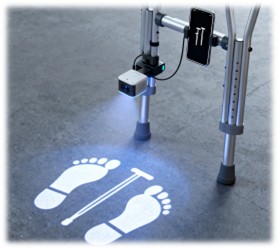
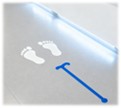
Augmented crutches combine a mini-projector with a smartphone, worn by the user in a lightweight, portable manner. The projector displays visual cues, such as footprints and crutch icons, directly onto the floor. These cues are timed to match the user's gait pattern, providing a clear and intuitive guide for each step. The system also incorporates persuasive textual cues and motivational messages to keep users engaged and motivated throughout their training sessions.
Key Design Dimensions: Timing, Controllability, and Awareness
The design of augmented crutches is centered around three critical dimensions: timing, controllability, and awareness. Timing is essential for effective training, as cues displayed at specified intervals help users understand the sequence of movements and the time required to complete each step. Controllability ensures that users feel confident and assured during the training process, with visual cues that are easy to understand and follow. Awareness is another crucial aspect, as real-time feedback and progress tracking help users monitor their improvement and stay motivated.
The Impact of Visual Cues on Gait Training
Visual cues play a vital role in enhancing gait training by providing users with clear and intuitive guidance. Studies have shown that visual cues can improve gait performance in individuals with mobility impairments, such as those with Parkinson's disease. Augmented crutches build on this research by integrating visual cues directly into the user's environment, creating an immersive and interactive training experience. The system's visual cues are designed to be bright and easily visible, ensuring effectiveness in various ground spaces.
Personalization and Adaptability in Rehabilitation
One of the key strengths of augmented crutches is their ability to provide personalized training experiences. Through a built-in questionnaire, the system assesses the user's specific needs and abilities, generating a tailored training program. This personalization ensures that users receive guidance and feedback that is adapted to their individual requirements, enhancing the effectiveness of their rehabilitation.
The Role of Motivation in Rehabilitation Success
Motivation is a critical factor in the success of any rehabilitation program. Augmented crutches incorporate motivational elements such as persuasive textual cues and timed challenges, keeping users engaged and focused on their training. By providing continuous feedback and a sense of progress, the system fosters a positive and motivating environment that encourages users to persist in their efforts.
The Future of Augmented Crutches: Expanding Capabilities and Applications
The development of augmented crutches represents a significant step forward in the field of assistive technologies. Future research could focus on expanding the system's capabilities, such as integrating additional sensory cues or developing an audio-enhanced version for visually impaired users. The potential for further innovations in this area remains exciting and full of promise.
Long-Term Impact on Mobility and Quality of Life
The long-term impact of augmented crutches could be substantial. By providing a portable, interactive, and motivational training solution, the system has the potential to improve outcomes for individuals recovering from injuries or dealing with mobility issues. Increased confidence and independence in using crutches could lead to better overall mobility and quality of life for users.
Conclusion: A Bright Future for Mobility Assistance
The development of augmented crutches represents a groundbreaking advancement in the field of assistive technologies. By leveraging the principles of persuasive technology and interactive design, this system offers a novel solution to the challenges of crutch mobility. Through its focus on timing, controllability, and awareness, augmented crutches aim to improve user engagement, confidence, and overall rehabilitation outcomes. As research in this area continues to evolve, the potential for further innovations in assistive technologies remains exciting and full of promise.
If you have related needs, please feel free to contact us for more information or product support.
Reference
- Peres, Beatriz, Pedro F. Campos, and Aida Azadegan. "A digitally-augmented ground space with timed visual cues for facilitating forearm crutches' mobility." IFIP Conference on Human-Computer Interaction. Cham: Springer International Publishing, 2019.
This article is for research use only. Do not use in any diagnostic or therapeutic application.
Crutches Series