- Home
- IVD
- By Technology Types
- By Diseases Types
- By Product Types
- Research
- Resource
- Distributors
- Company
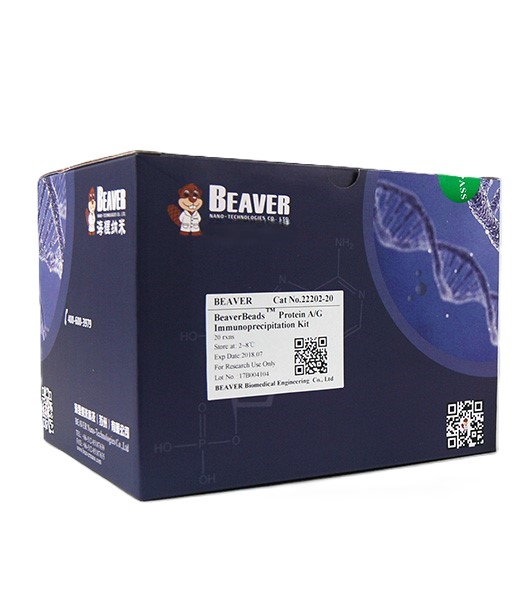
| Product Name | Protein A/G Immunoprecipitation Kit |
| Catalog No. | SM-HMM-0030 |
| Description | Protein A/G magnetic beads utilize nanosurface technology to encapsulate Protein A/G proteins in high density onto the surface of superparamagnetic microspheres. The product has more antibody binding sites, uses fewer beads, and has a low non-specific binding rate, allowing for easy and efficient immunoprecipitation experiments. The beads can bind more than 300 µg of Human IgG per mL, and only 25 µL of beads are required for a single precipitation reaction. The large specific surface area of micron-sized beads dramatically reduces the equilibration time required for antibody and antigen adsorption, with antibody adsorption completed within 15 minutes and antigen precipitation within 30 minutes. The short operation time avoids the hydrolysis of the target protein caused by prolonged operation and ensures the activity of the target protein and the integrity of the protein complex. |
| Features | High efficiency, high output, low consumption. Flexible and easy operation. Reliable and reproducible results. Low non-specific adsorption. |
| Storage | Stable at 2-8°C (can be stored or transported at room temperature for short periods of time) |
| Shelf Life | 2 years |
| Applications | This product can be widely used for the immunoprecipitation reaction of antigens in cell lysates, cell secretion supernatants, serum, ascites and other samples. |
Immunoprecipitation (IP) is a cornerstone technique in molecular biology and biochemistry, widely used to isolate and purify specific antigens, protein complexes, or target proteins from complex biological samples. It relies on the specific binding between antibodies and antigens to achieve selective enrichment, enabling downstream analyses such as Western blotting, mass spectrometry, and protein-protein interaction studies.
Traditional IP methods often use agarose or sepharose beads as carriers for antibodies, but they face limitations including low antibody binding capacity, long incubation times, high non-specific adsorption, and cumbersome centrifugation steps. These drawbacks can lead to reduced recovery of target proteins, compromised protein activity, and inconsistent experimental results.
With advancements in nanotechnology and material science, magnetic bead-based IP kits have emerged as a revolutionary alternative. Protein A/G magnetic beads, in particular, combine the high affinity of Protein A and Protein G for antibodies from multiple species (including human, mouse, rabbit, and goat) with the convenience of magnetic separation. This integration addresses the shortcomings of traditional methods, making IP experiments more efficient, reproducible, and user-friendly.
Our Protein A/G Immunoprecipitation Kit is developed based on this advanced magnetic bead technology, designed to meet the growing demand for reliable and high-performance IP tools in academic research, pharmaceutical development, and biotechnology applications. It is optimized for use with various sample types, ensuring versatility and robustness across different experimental scenarios.
High-density Protein A/G coating: Utilizes nanosurface technology to immobilize Protein A/G proteins at high density on superparamagnetic microspheres, maximizing antibody binding sites.
Exceptional antibody binding capacity: Binds over 300 µg of Human IgG per mL of beads, ensuring efficient capture of target antigens even in low-abundance samples.
Rapid reaction kinetics: Micron-sized beads offer a large specific surface area, reducing equilibration time—antibody adsorption is completed in 15 minutes and antigen precipitation in 30 minutes.
Low non-specific binding: The optimized bead surface minimizes non-specific adsorption of non-target proteins, enhancing the purity of isolated complexes.
Minimal bead usage: Only 25 µL of beads are required per precipitation reaction, reducing experimental costs while maintaining high performance.
Gentle magnetic separation: Eliminates the need for centrifugation, reducing mechanical stress on protein complexes and preserving target protein activity and integrity.
Flexible sample compatibility: Compatible with cell lysates, cell secretion supernatants, serum, ascites, and other biological samples, supporting diverse research needs.
Stable storage: Maintains stability at 2-8°C with short-term room temperature storage and transportation capability, ensuring product integrity during handling and shipping.
High efficiency and productivity: Short incubation times and high binding capacity enable faster experiment completion and higher recovery of target proteins, improving research throughput.
Reliable and reproducible results: Consistent bead performance and low non-specific binding reduce experimental variability, ensuring consistent outcomes across repeated experiments.
User-friendly operation: Simple workflow with magnetic separation simplifies experimental steps, making it accessible to researchers of all skill levels without specialized training.
Cost-effective: Low bead consumption per reaction and long shelf life (2 years) provide excellent value for long-term research projects.
Preserves protein activity: Short operation time and gentle processing prevent target protein hydrolysis and maintain the integrity of protein complexes, supporting accurate downstream analysis.
Versatile applications: Suitable for a wide range of IP-based experiments, including co-immunoprecipitation (Co-IP), chromatin immunoprecipitation (ChIP), and pull-down assays.
For research use only, not for clinical use.
|
There is no product in your cart. |
Copyright © 2026 Alta DiagnoTech. All rights reserved.