- Home
- IVD
- By Technology Types
- By Diseases Types
- By Product Types
- Research
- Resource
- Distributors
- Company
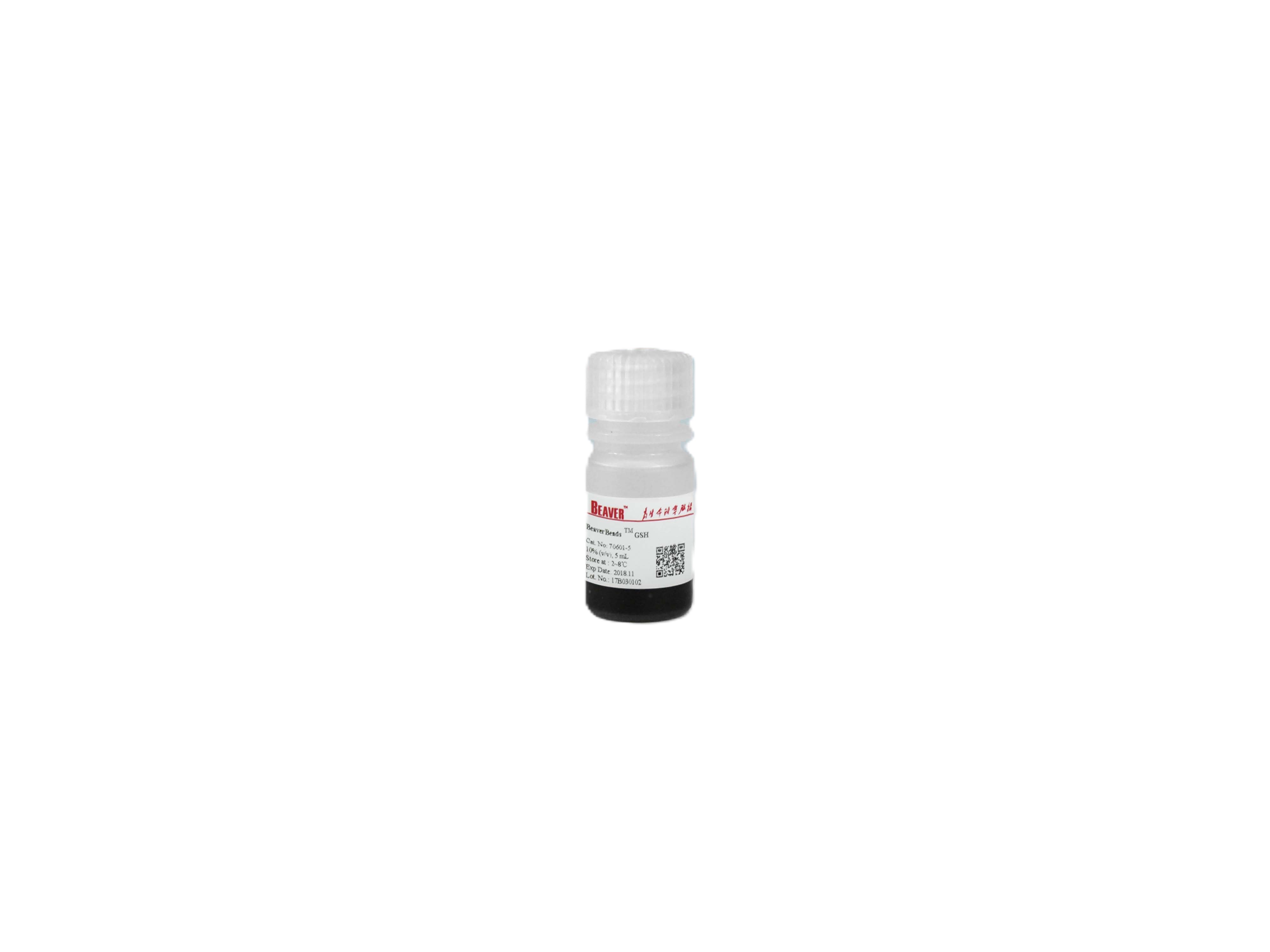
| Product Name | GST Fusion Protein Purification Kit |
| Catalog No. | SM-HMM-0062 |
| Description | GST fusion beads are a new type of functionalized material designed for the efficient and rapid purification of glutathione S-transferase (GST) fusion proteins. It can be used for one-step purification of high-purity target proteins from biological samples by magnetic separation, which greatly simplifies the purification process and improves the purification efficiency, and is suitable for scientific research and industrial fields to conveniently purify GST fusion proteins. |
| Storage | 4℃-30°C(for long term storage, 4℃-8°Cis recommended) |
| Average Particle Size | 30-150 µm |
| Preservation Fluid | 20% ethanol |
| Concentration | 10% (v/v) |
| Applications | Suitable for the isolation and purification of glutathione sulfotransferase (GST) fusion proteins, glutathione transferase, and other proteins with an affinity for glutathione. |
In modern life sciences, especially in the fields of recombinant protein research, drug development, and structural biology, obtaining high-purity, active target proteins is a core prerequisite for subsequent experiments and application development. However, natural proteins in biological samples (such as cell lysates) are often mixed with a large number of impurities like nucleic acids, other non-target proteins, and small-molecule metabolites, which severely interfere with protein function analysis, interaction studies, and industrial production processes. This makes efficient and specific protein purification technology an indispensable part of scientific research and industrial workflows.
Glutathione S-transferase (GST), a 35-kDa enzyme widely present in organisms, has a natural and high-affinity, specific binding ability to glutathione (GSH). This unique biochemical property has been widely exploited in the development of protein purification technologies. By fusing the GST gene with the target protein gene and expressing it in host systems (such as E. coli, insect cells, or mammalian cells), the resulting GST fusion protein can be specifically captured using materials modified with glutathione, thereby achieving rapid separation from complex biological matrices.
Traditional protein purification methods, such as ammonium sulfate precipitation, ion-exchange chromatography, and gel filtration chromatography, often require multiple steps of operation, have low purification efficiency, and are difficult to balance between purity and protein activity. In contrast, GST fusion protein purification technology realizes one-step purification, which greatly shortens the experimental cycle and reduces the loss of target protein activity caused by repeated operations.
With the continuous advancement of material science, GST fusion protein purification materials have also evolved. Early GST purification mainly relied on agarose-based resin materials, which showed good binding capacity but had limitations in operation methods—mostly relying on gravity flow or FPLC systems, which were not flexible enough for small-scale experiments or rapid sample processing. The GST fusion beads in our GST Fusion Protein Purification Kit represent a new generation of functionalized purification materials. By combining magnetic separation technology with high-performance glutathione-modified beads, it breaks through the constraints of traditional column chromatography. It allows researchers to complete purification operations in common laboratory containers (such as centrifuge tubes) without relying on complex chromatography equipment, making the technology more accessible to ordinary laboratories and small-scale industrial production scenarios.
Today, GST fusion protein purification technology has become a standard method in the field of protein research. It is widely used in the preparation of recombinant proteins for enzyme activity assays, the purification of antigens for antibody production, the isolation of proteins for protein-protein interaction studies (such as pull-down assays), and the small-batch production of functional proteins for preclinical drug screening. Our GST Fusion Protein Purification Kit is developed based on this mature technology and advanced magnetic bead materials, aiming to provide researchers and industrial users with a more convenient, efficient, and reliable tool to accelerate the progress of protein-related research and production.
Efficient Magnetic Separation Design: The kit adopts magnetic GST fusion beads, which enables rapid separation of the beads from the sample through a magnetic stand. Compared with traditional gravity-flow column or batch purification methods that rely on centrifugation, this design avoids tedious column assembly and long waiting times for solution flow, shortening the entire purification process to within 1-2 hours while ensuring high recovery rates of target proteins.
Broad Applicability to Sample Types: It is suitable for the purification of GST fusion proteins from a variety of biological samples, including cell lysates from E. coli, insect cells, and mammalian cells, as well as supernatant samples from in vitro transcription-translation systems. This versatility allows the kit to meet the needs of different host expression systems commonly used in laboratories and small-scale industrial production.
Controllable and Stable Storage Conditions: The kit can be stored at 4°C-30°C for short-term use, and long-term storage at 4°C-8°C is recommended. The 20% ethanol preservation fluid effectively maintains the activity of the GST fusion beads and prevents microbial contamination, ensuring that the beads maintain stable binding capacity for at least 12 months under proper storage conditions.
Optimized Bead Particle Size: The GST fusion beads have an average particle size of 30-150 µm. This particle size range balances the specific surface area (ensuring sufficient binding sites for target proteins) and the speed of magnetic separation (avoiding slow separation caused by overly small particles or uneven magnetic adsorption caused by overly large particles), ensuring efficient binding and rapid recovery in each purification cycle.
Compatibility with Native Protein Purification: The kit’s purification system is designed for native conditions. It does not require the use of strong denaturants (such as guanidine-HCl or urea), which can maintain the natural structure and biological activity of the GST fusion protein. This is crucial for experiments that require active proteins, such as enzyme activity detection, protein interaction analysis, and functional studies of recombinant proteins.
High Purity of Purified Products: Relying on the specific binding between GST and glutathione on the beads, the kit can specifically capture GST fusion proteins from complex biological samples. After one-step purification, the purity of the target protein can reach 80-90% (depending on the expression level of the target protein and the complexity of the sample matrix), which significantly reduces the number of subsequent purification steps and saves experimental costs.
Simplified Experimental Operation: The magnetic separation method eliminates the need for professional chromatography equipment (such as FPLC systems) or complex column operation steps. Even researchers with limited purification experience can complete the entire process by following simple operating procedures (including sample loading, washing, and elution), reducing the threshold for use and improving experimental efficiency.
High Binding Capacity: The GST fusion beads in the kit have a high density of glutathione ligands on their surface. Under optimal conditions, each milliliter of beads can bind to a certain amount of GST fusion protein (consistent with the binding capacity level of mainstream GST purification materials on the market). This ensures that the kit can meet the needs of both small-scale sample purification (such as milliliter-scale cell lysates) and small-batch preparation of target proteins.
Minimized Protein Loss: The entire purification process is carried out under mild conditions, and the magnetic separation method avoids the mechanical shear force generated during centrifugation or column flow in traditional methods. At the same time, the optimized washing and elution buffers reduce non-specific adsorption of impurities and ensure efficient elution of target proteins, thereby minimizing the loss of target proteins during purification (the recovery rate can reach more than 70% under standard operating conditions).
Cost-Effective for R&D and Small-Scale Production: The kit provides 5 mL of GST fusion beads (10% v/v concentration), which can support multiple purification experiments (the number of experiments depends on the amount of target protein per purification). Compared with pre-packed columns or large-volume bulk materials, it avoids waste caused by excessive material purchase for small-scale experiments and is more in line with the cost needs of laboratories and small-scale industrial R&D.
For research use only, not for clinical use.
|
There is no product in your cart. |
Copyright © 2026 Alta DiagnoTech. All rights reserved.