

- Home
- IVD
- By Technology Types
- By Diseases Types
- By Product Types
- Research
- Resource
- Distributors
- Company
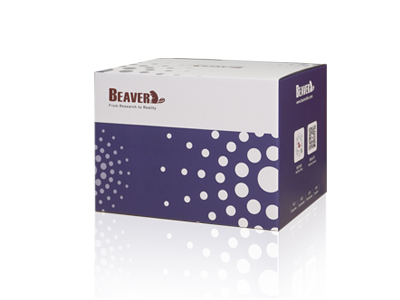
| Product Name | Magnetic Nanoparticles (400 nm) |
| Catalog No. | SM-HMM-0071 |
| Description | This product is widely used in the fields of magnetic resonance imaging, magnetic separation, targeted drug carrier, tumor thermotherapy technology, cell labeling and separation as well as as as enhanced developer, contrast agent and retinal detachment repair surgery due to its stable magnetic properties, better biocompatibility, stronger magnetism and non-toxicity, etc. It can also be used as a catalyst carrier, microwave absorbing material and magnetic recording material. |
| Features | Superparamagnetic and highly magnetically responsive. Uniform particle size distribution. |
| Storage | Stable at 2-8°C (can be stored or transported at room temperature for short periods of time) |
| Shelf Life | 2 years |
| Average Particle Size | 400nm |
| Magnetic Core | Fe3O4 |
| Magnetism Type | Superparamagnetic |
| Saturation Magnetization Strength | ~55 emu/g |
| Preservation Fluid | Sterile water |
| Concentration | 100 mg/mL |
Magnetic Nanoparticles (MNPs) have emerged as a pivotal class of nanomaterials in modern scientific research, with rapid development and expanding application value over the past few decades. These nanoscale particles, typically composed of magnetic metal oxides, stand out for their unique integration of nanoscale properties and magnetic responsiveness—two features that make them indispensable tools across multiple scientific disciplines.
Among the various materials used to fabricate MNPs, iron oxide (especially Fe₃O₄, magnetite) has become the gold standard for research applications. This is primarily due to its superior biocompatibility compared to other magnetic materials like cobalt or nickel (which exhibit inherent biological toxicity) and its status as one of the most magnetically robust natural minerals on Earth. For research scenarios—where safety, stability, and reproducibility are non-negotiable—Fe₃O₄-based MNPs eliminate the risk of toxic leaching while maintaining reliable magnetic performance, making them ideal for experiments involving biological samples (such as cells, proteins, or nucleic acids).
The 400 nm size of our Magnetic Nanoparticles is a carefully selected parameter tailored to research needs. In the spectrum of MNPs (which typically range from 1 nm to several micrometers), 400 nm balances two critical requirements: sufficient magnetic strength for efficient separation and manipulation, and a size that avoids interference with biological or chemical processes under study. For example, smaller MNPs (e.g., <100 nm) may lack the magnetic responsiveness needed for rapid separation in large-volume samples, while larger microscale magnetic beads (e.g., >1 μm) can disrupt cell cultures or block microfluidic channels—limitations that the 400 nm size overcomes.
In recent years, the demand for 400 nm Fe₃O₄-based MNPs in research has surged, driven by their versatility across key research areas. They serve as foundational tools in magnetic resonance imaging (MRI) research, where they enhance signal contrast to visualize cellular or tissue-level structures; in magnetic separation experiments, where they enable the purification of target molecules (e.g., DNA, RNA, proteins) or cells from complex mixtures; in targeted drug delivery studies, where they are used to simulate site-specific drug transport under external magnetic guidance; and in tumor thermotherapy research, where they generate heat in response to alternating magnetic fields to explore selective cancer cell ablation mechanisms. Additionally, they find applications in catalytic research (as recyclable catalyst carriers) and environmental science studies (as adsorbents for heavy metal removal from water samples).
Our 400 nm Magnetic Nanoparticles (Cat. No.: SM-HMM-0071) builds on this established background, with a Fe₃O₄ magnetic core and a stable, sterile water-based preservation system. It is engineered to meet the rigorous standards of research use—ensuring batch-to-batch consistency, non-toxicity, and compatibility with common laboratory protocols—making it a reliable choice for researchers in biochemistry, cell biology, materials science, and environmental science.
Superparamagnetic with Rapid Magnetic Response: The product exhibits excellent superparamagnetic properties—meaning it only displays magnetic behavior in the presence of an external magnetic field and loses residual magnetization immediately after the field is removed. This feature prevents irreversible particle aggregation (a common issue with ferromagnetic materials) and ensures easy resuspension after separation, critical for maintaining sample integrity in repeated experimental cycles. In practical tests, it achieves magnetic response times of less than 10 seconds, enabling fast separation steps that shorten overall experiment duration.
Uniform Particle Size Distribution: Each batch of the 400 nm Magnetic Nanoparticles undergoes strict quality control to ensure a narrow size distribution. Uniform particle size eliminates variability in magnetic performance, binding capacity, and sedimentation rate across the sample—key for reproducible research results. For example, in nucleic acid purification experiments, uniform particles ensure consistent binding of DNA/RNA to each bead, avoiding yield fluctuations between replicates.
High Saturation Magnetization Strength: With a saturation magnetization of ~55 emu/g, the product delivers strong magnetic force under an external magnetic field. This strength is sufficient to separate particles efficiently even from high-volume (e.g., 50 mL) or viscous samples (e.g., cell lysates), a critical advantage for researchers working with large-scale or complex experimental setups.
Excellent Biocompatibility: Composed of Fe₃O₄ (a material widely validated for biocompatibility in research), the product is non-toxic and does not induce adverse effects on biological samples such as cells, proteins, or nucleic acids. This allows its safe use in experiments like cell labeling, protein complex studies, or live-cell MRI imaging, where preserving biological activity is essential.
Stable Preservation and Easy Handling: The nanoparticles are suspended in sterile water, which maintains their stability and prevents microbial contamination (a risk in organic solvent-based preservation systems). They remain stable at 2–8°C for up to 2 years and can tolerate short-term room-temperature storage/transport—reducing logistical challenges for laboratories. Additionally, the sterile water matrix is compatible with most common laboratory buffers (e.g., PBS, Tris-HCl), eliminating the need for pre-washing steps before use.
High Concentration for Cost-Effective Use: With a concentration of 100 mg/mL, the product offers a high amount of active material per volume. This reduces the volume of beads required per experiment, lowering overall research costs and minimizing waste. For example, a single 10 mL vial can support hundreds of small-scale nucleic acid purification experiments or dozens of large-scale cell separation assays.
Tailored for research - Specific Reliability: Unlike general-purpose magnetic materials, our 400 nm Magnetic Nanoparticles are exclusively designed for research use—with every specification optimized to meet laboratory requirements. For instance, batch-to-batch consistency is guaranteed through strict quality control (e.g., size measurement via dynamic light scattering, magnetization testing via vibrating sample magnetometry), ensuring that results from different experiments or different vials are comparable—a critical factor for publishable research data.
Versatility Across Multiple Research Domains: The product’s combination of size, magnetism, and biocompatibility makes it applicable to a wide range of research fields, eliminating the need for researchers to source multiple specialized magnetic materials. It can be used in cell biology (cell labeling/separation), molecular biology (nucleic acid/protein purification), materials science (catalyst carrier studies), and imaging research (MRI contrast agent development)—streamlining laboratory workflows and reducing inventory complexity.
Minimizes Experimental Interference: The 400 nm size and Fe₃O₄ composition ensure the product does not disrupt the systems under study. For example, in cell culture experiments, the particles do not penetrate cell membranes (avoiding cellular damage) or clump to form aggregates that could block nutrient uptake. In chemical catalysis studies, the inert Fe₃O₄ core does not react with substrates or catalysts, preserving the integrity of reaction pathways.
User-Friendly for Routine and Automated Workflows: The product’s fast magnetic response and easy resuspension (via gentle shaking) make it suitable for both manual laboratory work and automated liquid handling systems. For high-throughput research (e.g., 96-well plate-based nucleic acid purification), its consistent performance and compatibility with automation tools reduce human error and increase experimental throughput—critical for large-scale studies.
Long Shelf Life Reduces Research Disruption: With a 2-year shelf life at 2–8°C, the product allows laboratories to stock up without concerns about degradation. This avoids the need for frequent reordering and prevents delays in experiments due to material shortages—especially valuable for long-term projects (e.g., 6–12 month cell tracking studies) that require consistent material supply.
For research use only, not for clinical use.
|
There is no product in your cart. |
Copyright © 2026 Alta DiagnoTech. All rights reserved.