
- Home
- IVD
- By Technology Types
- By Diseases Types
- By Product Types
- Research
- Resource
- Distributors
- Company
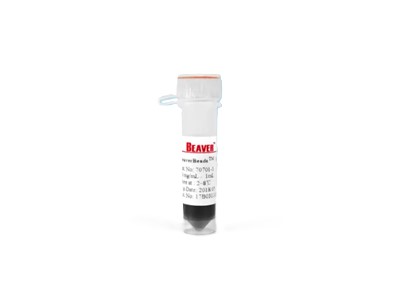
| Product Name | Mag NHS Kit |
| Catalog No. | SM-HMM-0032 |
| Description | The Mag NHS Kit is a polymer-based solid microsphere with the surface of the beads modified with NHS groups and a particle size of 2 µm, paired with the buffer required for coupling. It is capable of rapidly forming stable peptide bonds with proteins and other molecules with primary amine groups. Mainly used in the field of analytical testing (e.g., in vitro diagnostics, microbiological testing, immunoprecipitation, immunoprecipitation, etc.). |
| Features | Simple, no need for activation, can be directly covalently coupled with biological ligands; High efficiency, the coupling efficiency of biological ligands can reach more than 90%, which is much higher than that of carboxylated magnetic beads, and the binding load of ligands is higher at the same time; Rapid, 1~2 h to complete the coupling of biological ligands; Mild, room temperature or 4°Ccoupling, the pH of the coupling system is 5~9; Stable, forming stable amide bonds, preventing ligand detachment. Good biocompatibility, reduce non-specific adsorption. |
| Storage | 2-8°C |
| Average Particle Size | ~2 µm |
| Preservation Fluid | DMAC |
| Concentration | 10 mg/mL |
| Applications | In Vitro Diagnostics
Immunoassays Cell Sorting Immunoprecipitation/co-precipitation Protein/antibody Isolation and Purification |
In the rapidly evolving fields of molecular biology, immunology, and in vitro analytical research, the demand for efficient, reliable, and user-friendly tools to immobilize biomolecules (such as proteins, antibodies, and peptides) has grown exponentially. Traditional methods for biomolecule immobilization, such as those relying on carboxyl- or amino-modified magnetic beads, often involve complex and time-consuming activation steps—typically requiring reagents like EDC/NHS or glutaraldehyde to activate the bead surface before coupling. These additional steps not only extend the experimental workflow (often taking several hours or more) but also introduce risks of reagent contamination, inconsistent activation efficiency, and potential damage to sensitive biomolecules, ultimately compromising the reproducibility and reliability of experimental results.
Against this backdrop, the Mag NHS Kit was developed to address the critical limitations of conventional immobilization tools. As a polymer-based solid microsphere product with surface modification of NHS (N-Hydroxysuccinimide) groups, it leverages the unique reactivity of NHS esters to form stable amide bonds directly with primary amine groups (-NH₂) present in proteins, antibodies, enzymes, polypeptides, and other biomolecules. This design eliminates the need for pre-activation, streamlining the coupling process while ensuring high efficiency and stability.
Key drivers behind the development of the Mag NHS Kit include:
The need for time-efficient workflows: Researchers and lab technicians increasingly require tools that reduce hands-on time, allowing them to focus on data analysis and other high-priority tasks. The Mag NHS Kit completes biomolecule coupling in just 1-2 hours, a significant reduction compared to traditional methods that may take 4-6 hours or longer.
The demand for mild reaction conditions: Sensitive biomolecules (e.g., antibodies, enzymes) often lose activity under extreme pH, temperature, or chemical exposure. The Mag NHS Kit operates at room temperature or 4°C with a pH range of 5-9, ensuring optimal preservation of biomolecule activity.
The requirement for high coupling efficiency and stability: In applications like immunoprecipitation (IP), immunoassays, and protein purification, low coupling efficiency leads to wasted samples and inaccurate results. The Mag NHS Kit achieves over 90% coupling efficiency for biological ligands, far exceeding that of carboxylated magnetic beads, and forms stable amide bonds to prevent ligand detachment during washing or storage.
The focus on reduced non-specific adsorption: Non-specific binding of unwanted biomolecules to magnetic beads can interfere with detection signals or purification outcomes. The Mag NHS Kit’s polymer-based matrix and optimized surface modification minimize non-specific adsorption, enhancing the specificity of experimental results.
No pre-activation required: Unlike traditional carboxyl or amino magnetic beads that need EDC/NHS or glutaraldehyde for surface activation, the Mag NHS Kit’s beads come with pre-modified NHS groups. This allows direct covalent coupling with biological ligands containing primary amine groups, eliminating extra activation steps and reducing the risk of reagent-induced biomolecule damage.
Exceptionally high coupling efficiency: The surface NHS groups of the beads enable over 90% coupling efficiency for biological ligands (e.g., proteins, antibodies). This efficiency is significantly higher than that of carboxylated magnetic beads, ensuring maximum utilization of valuable biomolecule samples and minimizing waste.
Rapid coupling process: Biomolecule coupling can be completed in just 1-2 hours at room temperature (or 4°C for temperature-sensitive ligands). This shortens the overall experimental workflow, allowing researchers to obtain results faster compared to traditional methods that often take 4+ hours.
Mild reaction conditions: The coupling reaction operates within a pH range of 5-9 and at mild temperatures (room temperature or 4°C). These conditions avoid denaturation or activity loss of sensitive biomolecules (such as enzymes or monoclonal antibodies), ensuring the functional integrity of the coupled ligands.
Stable ligand attachment: The coupling process forms stable amide bonds between the NHS groups on the beads and the primary amine groups of the ligands. These bonds resist dissociation during subsequent washing, incubation, or storage steps, maintaining consistent performance throughout the experiment.
Low non-specific adsorption: The polymer-based solid microsphere matrix of the beads is designed for good biocompatibility. It minimizes non-specific binding of unwanted proteins, nucleic acids, or other biomolecules, reducing background interference in applications like immunoassays and immunoprecipitation.
Controlled and consistent particle size: With an average particle size of ~2 μm, the beads ensure uniform dispersion in solution (reducing aggregation) and efficient magnetic separation. The consistent particle size also contributes to reproducible coupling results across different experiments or sample batches.
Convenient storage and handling: The kit is stored at 2-8°C (no freezing required) and uses DMAC as the preservation fluid, which maintains the stability and reactivity of the NHS groups over the product’s shelf life. The beads are supplied at a ready-to-use concentration of 10 mg/mL, eliminating the need for pre-use dilution or reconstitution.
Simplifies experimental Operation: By removing the pre-activation step, the kit reduces the number of hands-on steps required for biomolecule immobilization. This not only saves time but also lowers the chance of human error (e.g., incorrect activation reagent ratios, incomplete activation), making it suitable for both experienced researchers and lab technicians new to magnetic bead-based workflows.
Maximizes biomolecule utility: The >90% coupling efficiency ensures that most of the input biomolecule (e.g., rare antibodies or recombinant proteins) is coupled to the beads, rather than being wasted in solution. This is particularly valuable for research scenarios where biomaterials are scarce or expensive.
Preserves biomolecule functionality: The mild pH (5-9) and temperature (room temp/4°C) conditions prevent the denaturation of sensitive biomolecules. For example, when coupling enzymes, the kit maintains enzymatic activity, ensuring that the coupled enzymes can still catalyze target reactions in downstream assays.
Enhances experimental reproducibility: The consistent particle size (~2 μm), uniform NHS group density on the bead surface, and stable coupling chemistry ensure that results are consistent across different experiments, batches of the kit, or even different users. This is critical for research studies that require repeated validation of data.
Reduces background noise in assays: Low non-specific adsorption means fewer unwanted biomolecules bind to the beads, resulting in clearer detection signals (e.g., in immunoassays) or purer target molecules (e.g., in protein purification). This reduces the need for additional washing steps and improves the accuracy of experimental outcomes.
Compatible with diverse research applications: The kit supports a broad range of research uses, including in vitro diagnostic-related research (e.g., development of immunoassay reagents), microbiological testing (e.g., capture of specific microbes), immunoprecipitation/co-precipitation (e.g., studying protein complexes), and protein/antibody isolation and purification. This versatility makes it a multi-purpose tool for various research fields.
Cost-effective for research labs: The kit’s high coupling efficiency reduces the amount of biomolecule needed per experiment, lowering long-term material costs. Additionally, the ready-to-use format and simple workflow reduce labor time, making it a cost-efficient choice for academic and industrial research labs.
For research use only, not for clinical use.
|
There is no product in your cart. |
Copyright © 2026 Alta DiagnoTech. All rights reserved.