

- Home
- IVD
- By Technology Types
- By Diseases Types
- By Product Types
- Research
- Resource
- Distributors
- Company
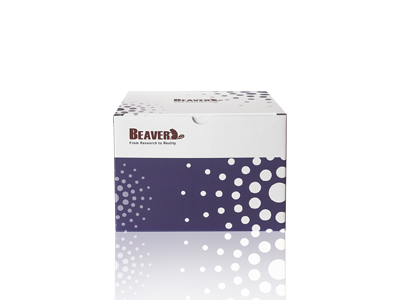
| Product Name | Magrose Protein A (10-30 µm) |
| Catalog No. | SM-HMM-0053 |
| Description | Protein A (or Protein G) Antibody Purification Beads are composite particles formed by covalent binding of NHS-activated superparamagnetic microspheres to Protein A (or Protein G). Compared with similar products in the international immuno-magnetic bead market, these products have higher antibody binding capacity and lower protein non-specific adsorption rate, and more uniform elution conditions, allowing for the isolation of >90% pure antibodies from serum samples in one-step purification. |
| Storage | 2-8°C |
| Shelf Life | 2 years |
| Average Particle Size | 10-30 µm |
| Concentration | 10% (v/v) |
Antibody purification is a critical step in biological and biochemical research, as high-purity antibodies are essential for applications such as Western blotting, immunofluorescence, enzyme-linked immunosorbent assays (ELISAs), and immunoprecipitation. The quality of purified antibodies directly impacts the accuracy, reproducibility, and reliability of experimental results, making the selection of efficient purification tools a key consideration for researchers worldwide.
Traditional antibody purification methods, such as column chromatography with sepharose beads, often face challenges including time-consuming protocols, low binding capacity, high non-specific adsorption, and inconsistent elution efficiency. These limitations can hinder research progress, increase experimental costs, and lead to variable outcomes across studies.
To address these pain points, superparamagnetic microsphere-based purification beads have emerged as a revolutionary solution. By combining the magnetic responsiveness of superparamagnetic particles with the high affinity of Protein A for antibodies, Magrose Protein A (10-30 µm) is designed to streamline the purification process while enhancing performance. Protein A, a bacterial protein derived from Staphylococcus aureus, specifically binds to the Fc region of immunoglobulins (IgG) from various species, enabling targeted and efficient isolation of antibodies from complex samples like serum, cell culture supernatants, and hybridoma extracts.
Composite particle structure formed by covalent binding of NHS-activated superparamagnetic microspheres to Protein A, ensuring stable conjugation and minimal leaching during purification.
Average particle size of 10-30 µm, balancing high surface area for antibody binding and efficient magnetic separation under standard laboratory conditions.
10% (v/v) concentration, providing optimal density for consistent sample handling and scalable purification workflows (from small-volume bench-top experiments to larger-scale research applications).
Compatible with one-step purification protocols, reducing experimental steps and minimizing the risk of sample degradation or contamination.
Uniform elution conditions, ensuring predictable and reproducible recovery of purified antibodies across different batches and sample types.
Storage stability at 2-8°C with a 2-year shelf life, offering long-term usability and reducing the need for frequent product replacement.
Higher antibody binding capacity compared to conventional purification beads, enabling maximum recovery of target antibodies even from low-concentration samples.
Lower protein non-specific adsorption rate, reducing contamination from non-target proteins and ensuring antibody purity exceeding 90% in a single purification step.
Efficient magnetic separation capability, eliminating the need for centrifugation or filtration steps and simplifying workflow automation (compatible with standard magnetic separators).
Versatility in sample compatibility, working effectively with serum and a wide range of other biological samples commonly used in research.
Time-saving and cost-effective, reducing labor intensity and reagent consumption while maintaining high purification performance.
Consistent product quality and batch-to-batch reproducibility, supporting reliable experimental results and data comparability across studies.
For research use only, not for clinical use.
|
There is no product in your cart. |
Copyright © 2026 Alta DiagnoTech. All rights reserved.