- Home
- IVD
- By Technology Types
- By Diseases Types
- By Product Types
- Research
- Resource
- Distributors
- Company
Cat.No: SM-HMM-0076 Datasheet
Specification
Quantities
Specification
Quantities
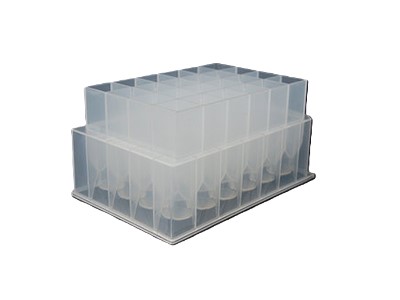
| Product Name | Deep Well Plate/Tip Comb |
| Catalog No. | SM-HMM-0076 |
| Description | PP material; V-bottom or round buttom, square well can withstand centrifugal force 4000 × g; can withstand -80 °C frozen Fit for Kingfisher Flex 96. |
| Features | High transparency, medical polypropylene material (Polypropylene, PP), no cover; Standard specifications without sterilization; Ultra-low heavy metal content, chemical stability is better, anti-static performance is better; No pyrogen, no DNase / RNase; Can withstand centrifugal force 4000 × g; Can withstand high temperature autoclave (121 ° C, 20min); Can withstand ultra-low temperature (- 86 ° C) long-term storage; Applicable to bacteria, cells, proteins, nucleic acids and other biological samples collection, subpackaging, reaction, culture and long-term storage; Applicable to a variety of standard specifications of the porous plate with equipment and automatic control device. |
In modern molecular biology, academic research, and pharmaceutical preclinical development, the demand for high-throughput, efficient, and reliable sample processing tools has grown exponentially. Traditional sample handling methods—such as using individual 1.5ml centrifuge tubes for sample storage and manual pipetting for transfer—are no longer sufficient to meet the needs of large-scale scientific experiments, where hundreds or even thousands of samples require simultaneous processing (e.g., nucleic acid purification, protein extraction, or microbial culture). This inefficiency has driven the development of specialized lab consumables, among which deep well plates and their matching tip combs have become indispensable core tools for research applications.
The Evolution of Deep Well Plates for Research: Deep well plates originated as an upgrade to standard microporous plates (e.g., 96-well or 24-well formats) to address the limitations of small sample volumes in research. Unlike conventional plates with shallow wells (typically 0.2-1ml volume), deep well plates feature extended well depth, enabling larger sample volumes (ranging from several milliliters to over 10ml depending on the format). This design eliminates the need for multiple tube transfers in research settings, reducing the risk of sample loss and cross-contamination—critical challenges in sensitive experiments like DNA/RNA purification, gene cloning, or protein expression studies.
The Role of Tip Combs in Research Automation: As research laboratories increasingly adopt automation (e.g., magnetic bead-based nucleic acid extractors, high-throughput liquid handlers) to accelerate experimental workflows, tip combs have emerged as a key accessory to complement deep well plates. These combs are engineered to align precisely with the wells of deep well plates, allowing simultaneous loading, mixing, or transfer of multiple research samples. This not only cuts down experimental time by 50% or more compared to manual operations but also ensures consistent sample handling—minimizing human error that can compromise the reliability of research data.
Application Expansion in Academic and Preclinical Research: Today, deep well plates and tip combs are widely used in academic research (e.g., university labs studying molecular mechanisms, genetic variation) and pharmaceutical preclinical development (e.g., drug target validation, in vitro efficacy testing). Their ability to withstand extreme conditions—such as ultra-low temperatures (-80°C to -86°C) for long-term storage of research samples and high temperatures (121°C) for autoclaving—has further expanded their utility across diverse research fields, including microbiology, biochemistry, and cell biology. Importantly, this product is exclusively intended for research use and not for clinical diagnostic applications.
Crafted from medical-grade polypropylene (PP) material, the product offers exceptional chemical stability, resisting corrosion from most polar organic solutions, acidic and alkaline reagents commonly used in molecular biology research (e.g., lysis buffers, ethanol washes).
Available in two well bottom designs (V-bottom and round bottom) to suit different research needs: V-bottom ensures complete sample recovery (ideal for centrifugation or magnetic bead separation in nucleic acid research), while round bottom minimizes sample residue (suitable for microbial culture or liquid mixing in biochemistry experiments).
Boasts ultra-low heavy metal content (below industry detection limits) and is certified free of pyrogens, DNase, RNase, and human DNA. This eliminates the risk of contaminating sensitive research samples, making it safe for applications like PCR, next-generation sequencing (NGS), and cell-based research assays.
Exceptional mechanical and thermal resistance: It can withstand centrifugal forces up to 4000 × g (compatible with high-speed centrifugation steps in sample preparation for research) and supports long-term storage at -86°C (preserving research samples like RNA or primary cells without degradation). It is also autoclave-safe at 121°C for 20 minutes, allowing repeated use after sterilization (reducing lab waste and research costs).
Features high transparency, enabling easy visual inspection of sample volume, color changes, or precipitation during research experiments—no need to remove samples from the plate for checking, saving time and reducing contamination risk.
The square well design enhances structural stability, preventing deformation even under high centrifugal force or repeated handling in busy research labs. Additionally, the plate’s flat top edge ensures tight sealing with adhesive films, silica gel pads, or aluminum heat-sealing films—no leakage or cross-well contamination during research processes.
Suitable for multiple stages of sample processing in one plate: from sample collection and subpackaging to reaction (e.g., enzyme digestion for molecular biology research), culture (e.g., bacterial growth for microbiology studies), and long-term storage. This "all-in-one" capability reduces sample transfer steps and simplifies workflow management in research settings.
Boosts Research Experimental Efficiency: The tip comb’s multi-channel design allows simultaneous handling of 24 samples (matching the plate’s 24-well format), cutting down the time required for sample loading, mixing, or transfer by up to 70% compared to manual, single-sample operations. This is particularly valuable for research labs processing large batches of samples daily in high-throughput projects.
Minimizes Sample Loss and Contamination in Research: The precise alignment between the tip comb and well openings ensures that research samples are transferred or mixed without spillage. Combined with the product’s DNase/RNase-free and pyrogen-free properties, it significantly reduces the risk of sample degradation or cross-contamination—critical for experiments with low-abundance research samples (e.g., circulating cell-free DNA, cfDNA, or rare microbial strains).
Cost-Effective for Research Budgets: Made of high-quality PP material, the plate and tip comb resist wear and tear from repeated autoclaving (up to 50+ cycles without deformation) and daily handling in research labs. This reusability lowers long-term consumable costs compared to single-use alternatives, helping research labs optimize their budgets. Additionally, the ultra-low heavy metal content avoids the need for expensive post-purchase testing to ensure sample safety for research.
Broad Compatibility with Existing Research Lab Setups: Unlike brand-specific consumables that only work with one manufacturer’s equipment, this product is compatible with most standard automated research platforms (e.g., Kingfisher series, multi-channel pipettes) and sealing tools. Research labs do not need to invest in new equipment to integrate it into their existing workflows, reducing capital expenditure.
Flexible for Diverse Research Applications: Whether used for nucleic acid purification (DNA/RNA) in molecular biology research, protein precipitation in biochemistry studies, microbial culture in microbiology research, or long-term sample storage for preclinical projects, the product adapts to different experimental requirements. The optional V-bottom/round bottom designs and wide temperature tolerance (-86°C to 121°C) eliminate the need to purchase multiple specialized plates for different research tasks.
Enhances Research Result Reproducibility: The uniform thickness of the plate’s walls and bottom ensures consistent heat transfer during processes like incubation or heat sealing in research. The tip comb’s precise tip spacing also guarantees that each research sample is handled identically, reducing variability between replicates—key for producing reliable, publishable research data.
For research use only, not for clinical use.
|
There is no product in your cart. |
Copyright © 2026 Alta DiagnoTech. All rights reserved.