Tailored Biofunctional Enzyme Mimics for Catalytic Therapy and Diagnostic Applications
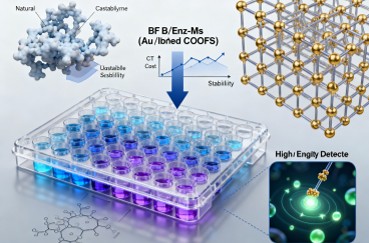
In the realm of medical diagnostics and therapeutics, the quest for innovative, efficient, and cost-effective solutions is unending. Traditional enzymes have long been the cornerstone of biochemical assays and treatments, yet their limitations—ranging from instability to high production costs—have spurred scientists to seek alternatives. Enter biofunctional enzyme-mimics (BF/Enz-Ms), synthetic nanomaterials engineered to replicate the catalytic prowess of natural enzymes. These cutting-edge entities are reshaping the landscape of in vitro diagnostics (IVD) and medicine, offering unprecedented precision, stability, and versatility.
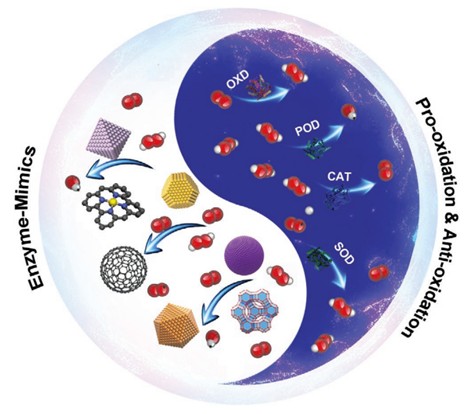 Fig.1 Illustration of the species of Enz-Ms (or nanozymes in many nanomedicine systems) and their biocatalytic mechanisms for prooxidation and antioxidation. (Tang Q., et al., 2021)
The Science Behind Enzyme-Mimics
- Defining Enzyme-Mimics
Enzyme-mimics, often termed nanozymes, are nanomaterials that exhibit enzyme-like catalytic activities. Unlike their biological counterparts, which are proteins with complex tertiary structures, enzyme-mimics are typically inorganic or hybrid materials. They can catalyze biochemical reactions under physiological conditions, mimicking the function of natural enzymes such as peroxidases, oxidases, and catalases.
- Types of Enzyme-Mimics
Enzyme-mimics can be broadly categorized into three groups based on their composition:
- Inorganic Nanomaterials: Including carbon-based materials (e.g., graphene oxide), semiconductors (e.g., TiO₂), and metal oxides (e.g., Fe₃O₄).
- Metals: Such as gold (Au), platinum (Pt), and their alloys, known for their peroxidase-like or oxidase-like activities.
- Organic Materials: Comprising small organic molecules, coordination polymers, metal-organic frameworks (MOFs), covalent organic frameworks (COFs), and conjugated polymers.
- Mechanisms of Catalysis
The catalytic mechanisms of BF/Enz-Ms vary depending on their composition. For instance, metal-based enzyme-mimics often rely on redox reactions, where metal ions cycle between different oxidation states to catalyze the conversion of substrates. In contrast, organic enzyme-mimics may utilize covalent or non-covalent interactions to facilitate chemical transformations. The ability to fine-tune these mechanisms through rational design and synthesis is a hallmark of BF/Enz-Ms, enabling tailored solutions for specific diagnostic and therapeutic needs.
Diagnostic Applications: Revolutionizing IVD
Colorimetric Assays
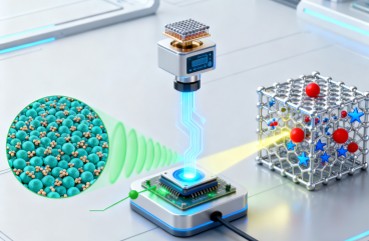
Colorimetric assays are a cornerstone of IVD, providing rapid and cost-effective detection of biomarkers. BF/Enz-Ms, particularly those with peroxidase-like activity, have emerged as powerful tools in this domain. For example, iron porphyrin-based COFs have been utilized to detect glucose and H₂O₂ with high sensitivity. The catalytic activity of these enzyme-mimics leads to a color change in the presence of the target analyte, which can be easily quantified using a spectrophotometer.
Immunoassays
Immunoassays, such as enzyme-linked immunosorbent assays (ELISAs), are widely used for the detection of proteins, antibodies, and other biomolecules. BF/Enz-Ms offer several advantages over natural enzymes in this context, including enhanced stability and cost-effectiveness. For instance, Au-doped COFs have been employed in ELISAs to detect allergens with high specificity and sensitivity. The ability to customize the catalytic properties of BF/Enz-Ms allows for the development of highly sensitive and selective immunoassays.
Biosensors
Biosensors are devices that combine biological recognition elements with physicochemical transducers to detect specific analytes. BF/Enz-Ms play a pivotal role in the development of next-generation biosensors. Their high catalytic efficiency and stability make them ideal candidates for use in electrochemical, optical, and piezoelectric biosensors. For example, MOF-based biosensors have been developed to detect glucose and other biomarkers with remarkable accuracy.
Therapeutic Applications: A New Frontier in Medicine
Cancer Therapy
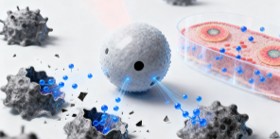
Cancer remains one of the most formidable challenges in medicine. BF/Enz-Ms are being explored as potent anticancer agents, either alone or in combination with other therapies. For instance, MOF-based nanoparticles loaded with chemotherapy drugs and photosensitizers can achieve synergistic antitumor effects. Upon near-infrared (NIR) light irradiation, these nanoparticles generate reactive oxygen species (ROS), inducing apoptosis in cancer cells while sparing healthy tissues.
Antibacterial Treatment
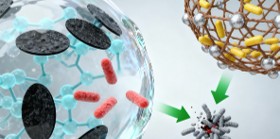
The rise of antibiotic-resistant bacteria has necessitated the development of novel antibacterial strategies. BF/Enz-Ms offer a promising solution in this regard. For example, MoS₂-based hydrogels with peroxidase-like activity can generate ROS to kill bacteria effectively. Similarly, metal-polyphenol networks (MPNs) loaded with antibiotics and platinum prodrugs can achieve enhanced antibacterial effects through a cascade reaction.
Wound Healing
Wound healing is a complex process that can be significantly impaired in conditions such as diabetes. BF/Enz-Ms are showing promise in promoting wound healing by modulating the local microenvironment. For instance, hydrogels loaded with MnO₂ nanoparticles can alleviate oxidative stress in diabetic wounds, enhancing cellular viability and accelerating the healing process. Similarly, cerium oxide (CeO₂)-based nanoparticles can scavenge ROS, protecting cells from oxidative damage and facilitating tissue regeneration.
Engineering Strategies: Tailoring BF/Enz-Ms for Specific Needs
- Functionalization with Bioactive Molecules
To enhance the biocompatibility and targeting capabilities of BF/Enz-Ms, scientists often functionalize them with bioactive molecules, polymers, or cell membranes. These modifications not only improve the stability and dispersion of nanomaterials in biological fluids but also enable them to interact specifically with target cells or tissues. For example, tumor cell membrane-coated nanoparticles can specifically target tumor tissues, delivering therapeutic agents directly to the site of action.
- Hydrogel-Based Platforms
Hydrogels, three-dimensional networks of water-soluble polymers, serve as excellent platforms for delivering BF/Enz-Ms. Their adjustable physical properties and controllable degradability allow for the sustained release of therapeutic agents. For instance, porous hydrogels loaded with enzyme-mimics can effectively treat bacterial infections by generating ROS locally.
- Metal-Organic Frameworks (MOFs)
MOFs, a class of porous crystalline materials, have emerged as promising candidates for enzyme-mimic applications. Their high surface area and tunable pore size make them ideal for encapsulating enzymes or catalytic metal centers. Researchers have developed MOF-based BF/Enz-Ms that exhibit peroxidase-like activity, enabling them to detect glucose or H₂O₂ with high sensitivity.
Challenges and Future Directions
Despite the remarkable progress made in the field of BF/Enz-Ms, several challenges remain to be addressed. One of the primary concerns is the biocompatibility and long-term toxicity of these nanomaterials in vivo. While many BF/Enz-Ms have shown promising results in preclinical studies, their safety and efficacy need to be validated in clinical trials.
Another challenge lies in the scalable production of BF/Enz-Ms with consistent quality and performance. Current synthesis methods often involve complex and time-consuming procedures, limiting their widespread adoption. Therefore, there is a pressing need for the development of simple, efficient, and scalable manufacturing processes.
Looking ahead, the future of BF/Enz-Ms is bright, with numerous opportunities for innovation and discovery. As researchers continue to unravel the mysteries of enzyme-mimetic catalysis and explore new materials and functionalization strategies, we can expect to see a new generation of BF/Enz-Ms with enhanced performance and expanded applications.
If you have related needs, please feel free to contact us for more information or product support.
Reference
- Tang, Qing, et al. "Engineering biofunctional enzyme‐mimics for catalytic therapeutics and diagnostics." Advanced Functional Materials 31.7 (2021): 2007475.
This article is for research use only. Do not use in any diagnostic or therapeutic application.