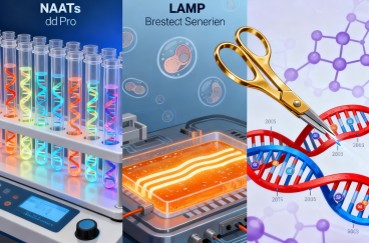
Enzyme-Driven Nucleic Acid Amplification for Molecular Diagnostics

Enzyme-Driven Nucleic Acid Amplification for Molecular Diagnostics

Molecular diagnosis has revolutionized the field of healthcare by enabling rapid, sensitive, and specific detection of infectious agents, genetic mutations, and various diseases. At the heart of molecular diagnosis lies Nucleic Acid Amplification Technologies (NAATs), which are essential for amplifying minute quantities of DNA or RNA to detectable levels. These technologies rely heavily on the activity of specialized enzymes that catalyze the replication and amplification processes. This comprehensive guide delves into the critical role of enzymes in NAATs, exploring their mechanisms, applications, and advancements.

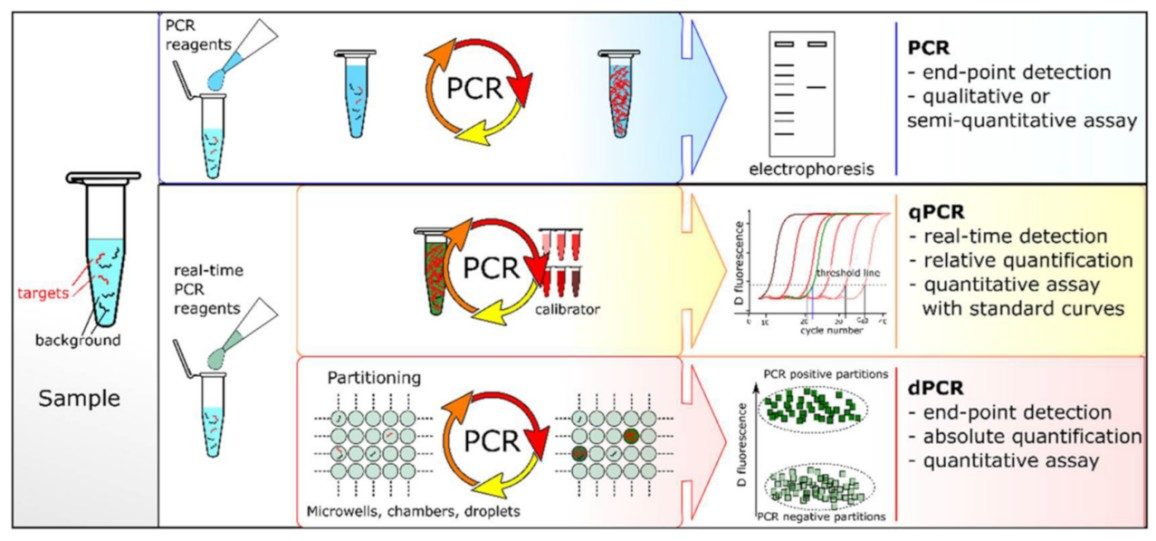
Comparative Analysis of PCR Platforms: End-Point, Real-Time Quantitative, and Digital PCR. Fig.1 PCR comparisons: end-point PCR, qPCR and dPCR. (Wang M., et al., 2023)

Enzymes in Polymerase Chain Reaction (PCR)

  • The Role of Taq Polymerase
    PCR, since its inception in 1983 by Kary Mullis, has become the gold standard in molecular diagnostics. Central to PCR is the enzyme Taq polymerase, derived from the thermophilic bacterium Thermus aquaticus. Taq polymerase exhibits remarkable thermal stability, retaining activity even after prolonged exposure to high temperatures required for DNA denaturation. This property allows PCR to undergo multiple cycles of denaturation, annealing, and extension, resulting in exponential amplification of target DNA sequences.
  • Advantages and Limitations
    The primary advantage of PCR lies in its high sensitivity and specificity, making it suitable for a wide range of applications, from infectious disease diagnosis to forensic science. However, PCR requires sophisticated thermal cyclers and skilled personnel, limiting its use in resource-poor settings. Moreover, the risk of contamination and false positives necessitates stringent laboratory protocols.

Isothermal Amplification Technologies: Enzymes at Work

Loop-Mediated Isothermal Amplification (LAMP)

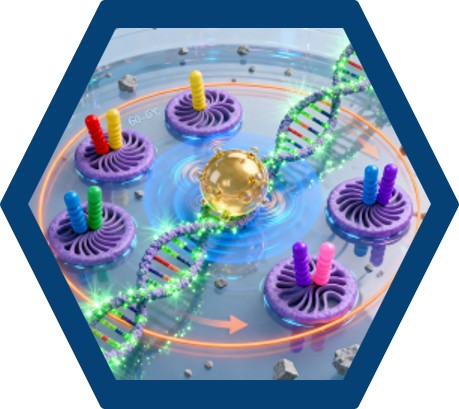
LAMP, invented by Notomi et al. in 2000, is a prominent isothermal amplification technique that operates at a constant temperature (60-65°C). LAMP employs Bst DNA polymerase, which possesses strong strand displacement activity, eliminating the need for thermal cycling. The reaction utilizes four to six primers designed to recognize six distinct regions of the target DNA, ensuring high specificity. LAMP's rapid amplification and high tolerance to inhibitors make it ideal for point-of-care testing in resource-limited areas.

Recombinase Polymerase Amplification (RPA)

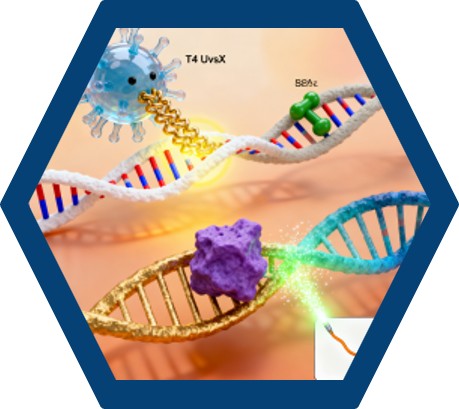
RPA, developed by Piepenburg et al. in 2006, is another innovative isothermal amplification method that operates at 37-42°C. RPA relies on three key enzymes: recombinase (T4 UvsX), single-stranded DNA binding protein (SSB), and Bsu DNA polymerase. The recombinase forms a protein-DNA complex with primers, facilitating their hybridization to the target DNA. SSB stabilizes the displaced strand, while Bsu polymerase extends the primer, synthesizing new DNA strands. RPA's rapid detection capabilities and compatibility with fluorescent probes make it suitable for real-time diagnostics.


Rolling Circle Amplification (RCA)

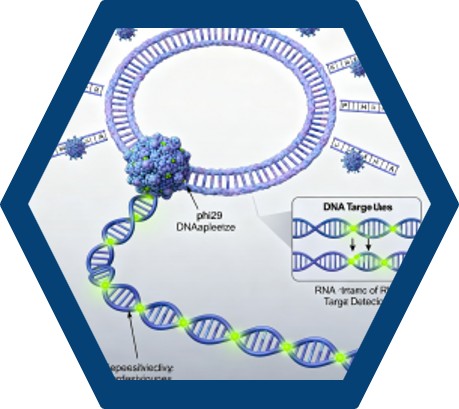
RCA, developed by Salas and colleagues in 1989, is based on the principle of rolling circle replication observed in circular plasmids and virus genomes. RCA utilizes phi29 DNA polymerase, known for its high processivity and strand displacement activity. The enzyme synthesizes long, single-stranded DNA concatemers, enabling high-sensitivity detection. RCA's versatility extends to the detection of both DNA and RNA targets, making it valuable in various diagnostic applications.

CRISPR-Cas Systems: Enzymatic Precision in Molecular Diagnostics

  • Overview of CRISPR-Cas Technology
    CRISPR-Cas systems, adapted from bacterial and archaeal immune defenses, have emerged as powerful tools for genome editing and molecular diagnostics. These systems utilize Cas proteins guided by CRISPR RNAs (crRNAs) to specifically recognize and cleave foreign nucleic acids. The simplicity, rapidity, and high accuracy of CRISPR-Cas systems have spurred their integration with various NAATs.
  • Cas9, Cas12, and Cas13: Enzymatic Diversity
    Cas9, a class 2 type II CRISPR effector, is renowned for its ability to cleave double-stranded DNA (dsDNA) guided by a single guide RNA (sgRNA). Cas12 (class 2 type V) and Cas13 (class 2 type VI) offer additional functionalities. Cas12 cleaves both dsDNA and single-stranded DNA (ssDNA), while Cas13 specifically targets ssRNA. The distinct cleavage activities of these Cas proteins enable their use in diverse diagnostic applications, from pathogen detection to single nucleotide polymorphism (SNP) typing.
  • CRISPR-Based Diagnostic Platforms
    The integration of CRISPR-Cas systems with NAATs has led to the development of innovative diagnostic platforms. For instance, SHERLOCK (Specific High-Sensitivity Enzymatic Reporter Unlocking) combines Cas13a with RPA for the detection of Zika and Dengue viruses. DETECTR (DNA Endonuclease-Targeted CRISPR Trans Reporter) utilizes Cas12a for rapid and specific detection of SARS-CoV-2. These platforms leverage the enzymatic precision of Cas proteins to achieve high sensitivity and specificity in molecular diagnostics.

Clinical Applications of NAATs: Enzymes Driving Diagnosis

Infectious Disease Diagnosis

NAATs have transformed the landscape of infectious disease diagnosis by enabling rapid and accurate detection of pathogens. For example, RT-PCR remains the gold standard for diagnosing COVID-19, while isothermal amplification methods like LAMP and RPA offer on-site testing capabilities. The integration of CRISPR-Cas systems further enhances the sensitivity and specificity of these assays, facilitating early detection and timely intervention.

Tumor Diagnosis and Early Detection

Early diagnosis of cancer significantly improves patient outcomes. NAATs play a crucial role in detecting circulating tumor cells (CTCs) and tumor-derived nucleic acids in bodily fluids. RCA, in combination with electrochemical or fluorescent sensors, enables highly sensitive detection of CTCs. CRISPR-based assays, such as CRISPR-Cas12a, offer rapid and specific detection of tumor-associated miRNAs, aiding in early cancer diagnosis.

Genetic Disease Diagnosis

NAATs are invaluable tools for diagnosing genetic diseases, particularly for prenatal and pre-symptomatic diagnosis. Multiplex ddPCR allows for the non-invasive detection of fetal aneuploidies, while LAMP-based assays facilitate rapid sex determination in embryos. SNP typing methods, leveraging CRISPR-Cas systems, enable the identification of disease-associated genetic variations, paving the way for personalized medicine.

Future Directions and Challenges

  • Simplification and Automation
    The future of NAATs lies in simplification and automation. Microfluidic chips, capable of integrating multiple reactions, offer a promising platform for developing portable, real-time detection systems. These chips can facilitate the simultaneous detection of multiple targets, enhancing the efficiency and throughput of molecular diagnostics.
  • Performance Optimization of Enzymes
    Improving the performance of enzymes used in NAATs is crucial for enhancing the sensitivity and specificity of assays. Advances in protein engineering and directed evolution techniques can yield enzymes with superior catalytic properties, such as increased thermal stability, higher processivity, and enhanced tolerance to inhibitors.
  • Multiplex Target Amplification
    Developing methods for multiplex target amplification remains a significant challenge. Future NAATs must achieve high sensitivity and specificity while detecting multiple targets within a single closed tube. This capability is essential for comprehensive disease diagnosis and monitoring, particularly in complex clinical scenarios.

If you have related needs, please feel free to contact us for more information or product support.

Reference

  1. Wang, Meiling, et al. "Enzyme-assisted nucleic acid amplification in molecular diagnosis: a review." Biosensors 13.2 (2023): 160.

This article is for research use only. Do not use in any diagnostic or therapeutic application.

Get in Touch
0
0

There is no product in your cart.