Digestive Enzyme Sensing for the Diagnosis and Monitoring of Pancreatitis
Pancreatitis, an inflammatory condition of the pancreas, poses significant diagnostic and therapeutic challenges. The pancreas, a critical organ in the digestive system, secretes enzymes such as amylase, trypsin, chymotrypsin, and lipase, which are essential for breaking down nutrients. When these enzymes are activated prematurely within the pancreas, they lead to self-digestion and inflammation, resulting in acute or chronic pancreatitis. Early and accurate detection of pancreatitis is crucial for effective management and to prevent complications. Traditional diagnostic methods, including imaging and blood tests, have limitations in terms of sensitivity, specificity, and accessibility. Therefore, the development of advanced in vitro diagnostic (IVD) techniques for detecting digestive enzymes has become a research priority. This article explores the latest advances in the detection and monitoring of pancreatitis through digestive enzyme sensing.
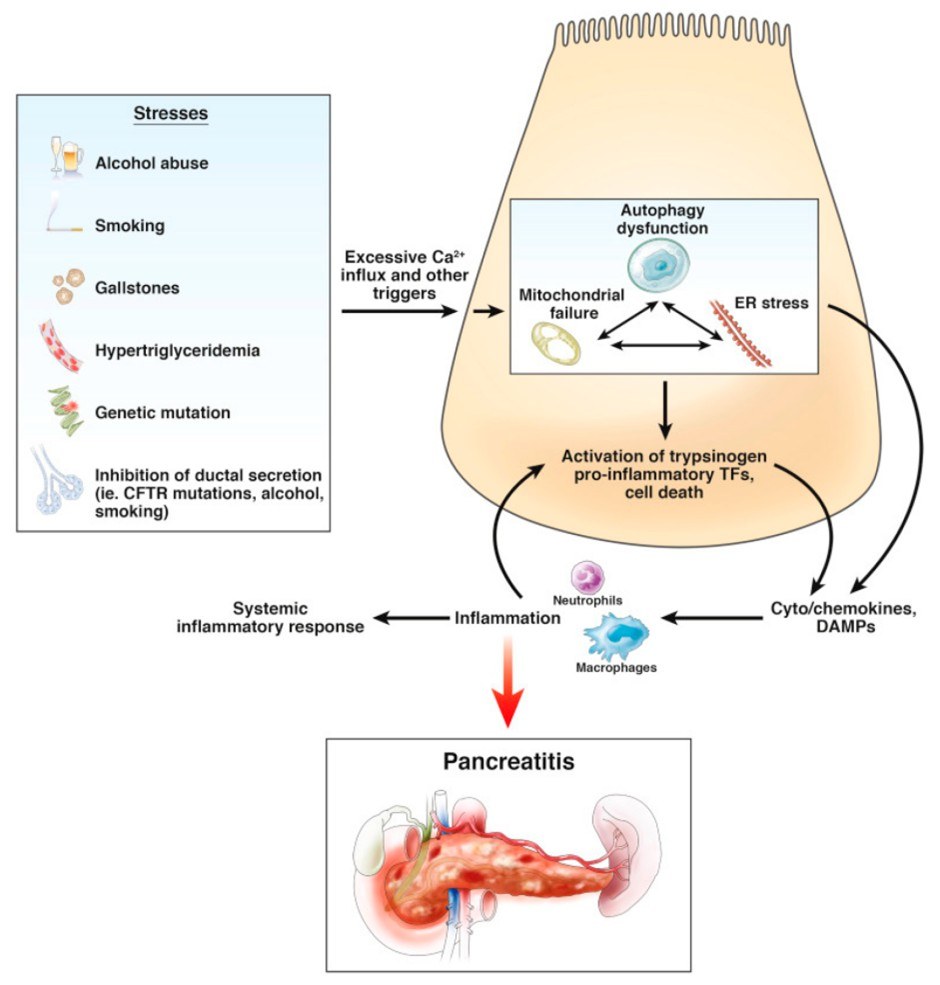 Fig.1 Summary of environmental stressors and genetic factors known to increase the risk for pancreatitis. (Yin J., et al., 2023)
The Significance of Digestive Enzymes in Pancreatitis
Enzymatic Pathways and Pancreatitis
The pancreas secretes a suite of digestive enzymes that play pivotal roles in the digestion of carbohydrates, proteins, and fats. Amylase hydrolyzes carbohydrates, while proteases like trypsin and chymotrypsin break down proteins. Lipase is responsible for the digestion of fats. In pancreatitis, the premature activation of these enzymes within the pancreatic acinar cells leads to tissue damage and inflammation. The severity of pancreatitis can vary from mild, self-limiting episodes to severe, life-threatening conditions.
Clinical Biomarkers for Pancreatitis
Elevated levels of pancreatic enzymes in the blood and urine are hallmark indicators of pancreatitis. Serum amylase and lipase levels, for instance, are commonly used as diagnostic markers for acute pancreatitis (AP). However, these markers lack specificity, as they can be elevated in other conditions such as renal failure and gastrointestinal perforation. Therefore, the development of more accurate and specific biomarkers is essential for improving the diagnosis of pancreatitis.
Optical Sensing Techniques for Digestive Enzyme Detection
Colorimetric Sensors
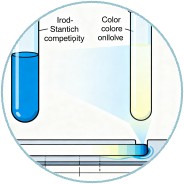
Colorimetric sensors offer a simple and cost-effective method for detecting digestive enzymes. These sensors rely on the color change of a substrate upon enzymatic hydrolysis. For example, the iodine-starch complex forms a blue color that disappears as amylase hydrolyzes starch. This principle has been applied in paper-based sensors, where the distance a colored solution travels on pH test paper indicates enzyme activity. Such sensors are particularly useful for point-of-care testing (POCT) in resource-limited settings.
Fluorescence-Based Sensors
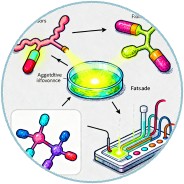
Fluorescence-based sensors provide high sensitivity and specificity for enzyme detection. These sensors utilize fluorescent probes that emit light upon interaction with the target enzyme or its hydrolysis products. For instance, aggregation-induced emission (AIE) probes have been designed to detect lipase activity by fluorescing upon interaction with fatty acids released during lipolysis. Fluorescence sensors can be integrated into microfluidic devices for high-throughput screening.
Surface Plasmon Resonance (SPR) Sensors
SPR sensors detect changes in the refractive index of a metal surface upon interaction with target molecules. By immobilizing enzyme-specific substrates on the metal surface, SPR sensors can detect enzyme activity through changes in the resonance angle. This technique has been applied to detect trypsin and other proteases with high sensitivity. SPR sensors offer real-time monitoring and can be used for kinetic studies of enzyme reactions.
Electrical Sensing Methods for Digestive Enzyme Detection
- Electrochemical Sensors
Electrochemical sensors convert biochemical reactions into electrical signals. By immobilizing enzyme-specific substrates on an electrode surface, electrochemical sensors can detect enzyme activity through changes in current or potential. For instance, amperometric sensors have been developed to detect amylase and lipase activities with high specificity. These sensors can be miniaturized and integrated into portable devices for POCT.
- Resistance and Impedance Sensors
Resistance and impedance sensors measure changes in electrical properties caused by enzymatic reactions. For example, quartz crystal microbalance (QCM) sensors detect mass changes on the sensor surface due to enzyme-substrate interactions. These sensors have been used to detect trypsin and other proteases with high sensitivity. Impedance sensors can also provide information about the viscosity and conductivity of the sample, which can be useful for distinguishing between different types of pancreatitis.
Mechanical Sensing Techniques for Digestive Enzyme Detection
Viscosity-Based Sensors
Enzymatic hydrolysis can alter the viscosity of a solution, which can be detected using mechanical sensors. For example, the viscosity change caused by amylase hydrolysis has been used to develop paper-based sensors for POCT. These sensors are simple and inexpensive, making them suitable for use in low-resource settings.
Acoustic Wave Sensors
Acoustic wave sensors, such as thickness-shear mode (TSM) resonators, detect changes in mechanical resonance frequency caused by enzymatic reactions. These sensors have been applied to detect proteases like trypsin and chymotrypsin with high accuracy. Acoustic wave sensors offer non-invasive and label-free detection, making them attractive for clinical applications.
Portable and Point-of-Care Testing (POCT) Devices
- Paper-Based Sensors
Paper-based sensors offer a simple, low-cost, and disposable platform for enzyme detection. By incorporating enzyme-specific substrates and detection reagents into paper matrices, these sensors can provide visual or semi-quantitative results. For instance, paper-based sensors have been developed to detect amylase and lipase activities using colorimetric or fluorescent methods. These sensors are particularly useful for POCT in remote areas.
- Smartphone-Based Sensors
Smartphones, equipped with advanced cameras and processing capabilities, have been leveraged to develop portable sensing devices. By integrating sensing modules with smartphone applications, users can perform enzyme detection and receive real-time results. For example, smartphone cameras have been used to capture color changes in paper-based sensors or to measure fluorescence signals from fluorescent probes. Smartphone-based sensors offer convenience and accessibility, making them suitable for home testing.
- Blood Glucose Meter-Based Sensors
Blood glucose meters, widely used for diabetes management, have been repurposed to detect pancreatic enzymes. By designing enzyme-specific substrates that produce glucose upon enzymatic hydrolysis, blood glucose meters can indirectly measure enzyme activity. This approach offers a convenient and cost-effective solution for POCT. Blood glucose meter-based sensors can be easily integrated into existing healthcare systems.
Challenges and Future Directions
- Sensitivity and Specificity
While current sensing techniques offer high sensitivity, improving specificity remains a challenge. The development of more specific substrates and probes that can distinguish between pancreatic enzymes and other similar enzymes is crucial. For instance, the use of aptamers or antibodies as recognition elements can enhance the specificity of sensors.
- Multiplex Detection
The simultaneous detection of multiple pancreatic enzymes can provide more comprehensive information for pancreatitis diagnosis. However, developing sensing platforms capable of multiplex detection without cross-reactivity is challenging. Microarray and lab-on-a-chip technologies offer promising solutions for multiplex detection.
- Clinical Validation
Many advanced sensing techniques have shown promising results in laboratory settings but require clinical validation to demonstrate their effectiveness in real-world scenarios. Collaborative efforts between researchers, clinicians, and industry partners are essential to bridge this gap. Clinical trials and longitudinal studies can provide valuable insights into the performance of sensing devices.
- Cost and Accessibility
Reducing the cost and improving the accessibility of sensing devices are critical for widespread adoption. Innovations in materials science and microfabrication technologies can help achieve this goal. For instance, the use of low-cost materials and scalable manufacturing processes can reduce the cost of sensors.
If you have related needs, please feel free to contact us for more information or product support.
Reference
- Yin, Jiaju, et al. "Sensing of digestive Enzymes—Diagnosis and monitoring of pancreatitis." Chemosensors 11.9 (2023): 469.
This article is for research use only. Do not use in any diagnostic or therapeutic application.