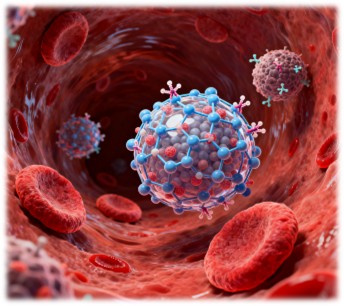
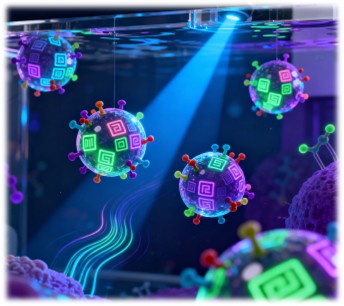
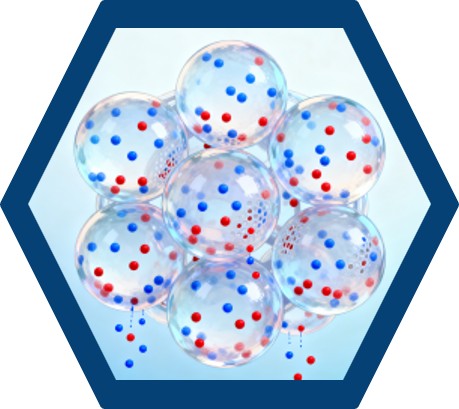
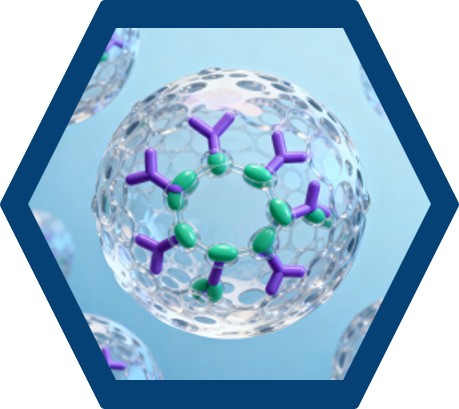
Polymer microspheres, tiny spherical particles ranging from 1 to 1000 microns in diameter, have emerged as a groundbreaking innovation in the field of cancer diagnosis and treatment. These microspheres are crafted by dissolving or dispersing drugs within a polymeric matrix, enabling controlled drug release and targeted delivery. Their versatility, biocompatibility, and ability to encapsulate a wide range of therapeutic agents make them an attractive option for oncologists and researchers worldwide.
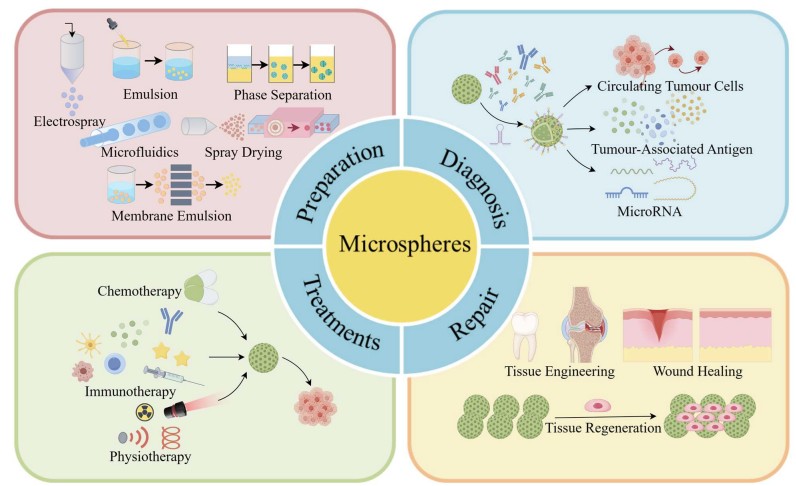 Fig.1 A diagram of polymer microspheres showing their preparation and application in cancer. (Zhai M., et al., 2024)
Polymer Microspheres in Cancer Diagnosis
Detection of Circulating Tumor Cells (CTCs)
Circulating Tumor Cells (CTCs) are critical biomarkers for cancer diagnosis and prognosis, providing insights into metastasis and disease progression. Traditional methods for CTC isolation face challenges due to their low concentration in blood. Polymer microspheres, particularly those functionalized with antibodies or physical properties, offer a promising solution.
For instance, hollow suspended immunomagnetic microspheres (FIMMs) utilize buoyancy and magnetic fields to efficiently capture CTCs with a high capture rate of 93% and a detection limit of 5 cells/mL. This method has been successfully applied in detecting CTCs in blood samples from patients with epithelial cancers. Additionally, combinations of polystyrene microspheres and acoustic-sensitive particles in acoustic fluidic microarray systems have shown efficacy in isolating CTCs, offering a non-invasive and efficient approach to cancer diagnosis.
Multiplexed Immunoassays for Tumor-Associated Antigens (TAAs)
Tumor-Associated Antigens (TAAs) are crucial for accurate cancer diagnosis. Multiplexed immunoassays, leveraging suspension-encoded microspheres combined with flow cytometry, enable the simultaneous detection of multiple TAAs. This high-throughput approach enhances diagnostic accuracy and sensitivity.
Studies have demonstrated the use of fluorescent microspheres embedded with quantum dots for multiplexed immunoassays of tumor markers. For example, Tang et al. utilized PLA-MA microspheres embedded with quantum dots to detect multiple tumor markers, significantly improving detection sensitivity and efficiency. Such advancements pave the way for more precise and early cancer diagnosis.
MicroRNA (miRNA) Detection
MicroRNAs (miRNAs) play a pivotal role in cancer regulation. However, their low abundance and concentration pose challenges for detection. Polymer microspheres offer a solution by providing a platform for accurate, cost-effective, and highly sensitive miRNA assays.
Tania et al. developed a molecular beacon probe integrated into a supramolecular PEG hydrogel to directly detect miR-21 in small sample volumes with high sensitivity. This approach eliminates the need for prior amplification and enables rapid analysis. Further improvements involved combining the probe with microgel technology, enhancing accuracy, linearity, and precision in detecting breast cancer markers like miR-103-3p.
Polymer Microspheres in Cancer Treatment
Chemotherapy
Chemotherapy remains a cornerstone of cancer treatment, but its side effects often limit therapeutic efficacy. Polymer microspheres, as drug carriers, enable targeted delivery of chemotherapeutic agents to tumor sites, minimizing harm to healthy tissues and enhancing treatment outcomes.
Adriamycin/Doxorubicin (DOX)
DOX, a potent antitumor agent, faces challenges due to its toxicity and resistance development. Microsphere-loaded DOX formulations have shown promise in overcoming these limitations. For instance, gelatin microspheres co-loaded with DOX and Fe3O4 have been utilized in MRI-guided microwave thermotherapy, enhancing drug delivery efficiency and therapeutic efficacy.
Pentafluorouracil (5-FU)
5-FU, another widely used antitumor drug, has been encapsulated in lysozyme microspheres and AuNR for ultrasound-facilitated drug delivery. This approach leverages temporary pores on the cell surface to facilitate drug entry, effectively killing cancer cells. Additionally, co-loading DOX and 5-FU onto layered double hydroxide microspheres has shown sustained release effects on colon cancer cells, offering a promising formulation for oral co-administration.
Immunotherapy
Immunotherapy aims to boost the immune system's ability to recognize and attack cancer cells. However, challenges such as drug stability and distribution hinder its effectiveness. Polymer microspheres offer a solution by delivering immunotherapeutic agents directly to the tumor site, enhancing drug stability and reducing side effects.
Cytokines
Cytokines, small molecules regulating immune responses, have shown efficacy in cancer immunotherapy. However, their use is limited by dose-related toxicities. Polymeric particles encapsulating cytokines, such as interleukin-1α (IL-1α) and interleukin-15 (IL-15), offer a sustained release platform, reducing toxicity and enhancing therapeutic efficacy.
Antibodies
Monoclonal antibodies are crucial in cancer immunotherapy but face challenges such as low stability and short half-life. Biodegradable microgel carriers enable controlled release of antibodies, enhancing their stability and bioavailability. Additionally, combining antibodies with cytokines in microsphere formulations has shown promise in enhancing lymphocyte function and suppressing tumor growth.
Physiotherapy
Physiotherapy, including radiotherapy and phototherapy, plays a vital role in cancer treatment. However, traditional methods face limitations such as side effects and limited effectiveness. Microsphere-loaded drug therapies offer a promising alternative, providing high efficiency, precision, and minimal side effects.
Radiotherapy
Brachytherapy, involving radioactive seed implantation, is effective for advanced hepatocellular carcinoma. However, its limitations necessitate the use of microsphere-encapsulated radionuclides. Microspheres loaded with radionuclides such as 90Y, 111In, and 177Lu offer therapeutic and imaging functions, enhancing treatment precision and monitoring.
Phototherapy
Photodynamic therapy (PDT) and photothermal therapy (PTT) leverage light-sensitive materials to induce tumor cell death. Polymer microspheres, incorporating materials like gold nanoparticles and MXene nanosheets, offer a platform for combined PDT and PTT. For instance, CNT/MXene microspheres exhibit strong photothermal effects and stability, efficiently generating reactive oxygen species under near-infrared light, offering a novel strategy for cancer therapy.
Conclusion and Future Directions
Polymer microspheres have emerged as a versatile and innovative tool in cancer diagnosis and treatment. Their ability to encapsulate and deliver a wide range of therapeutic agents, coupled with their biocompatibility and controlled release properties, positions them as a game-changer in oncology.
However, challenges such as large-scale production, material safety, and expanding application fields need to be addressed. Future research should focus on enhancing the efficiency of microsphere preparation, exploring new biomaterials, and broadening the application areas of microspheres.
In conclusion, polymer microspheres hold immense potential in revolutionizing cancer diagnosis and treatment. With continued advancements and research, these tiny particles are poised to make a significant impact on global healthcare, improving the quality of life for millions of cancer patients worldwide.
If you have related needs, please feel free to contact us for more information or product support.
Reference
- Zhai, Mingyue, et al. "Polymer microspheres and their application in cancer diagnosis and treatment." International journal of molecular sciences 25.12 (2024): 6556.
This article is for research use only. Do not use in any diagnostic or therapeutic application.