Atrial fibrillation (AFib) is a complex cardiac arrhythmia characterized by irregular electrical activity in the heart's upper chambers, significantly increasing the risk of stroke and heart failure. This resource provides a comprehensive guide to the modern diagnostic approach for AFib, detailing how an integrated toolkit—combining electrocardiography, extended ambulatory monitoring, and essential biomarker testing—enables accurate detection, identifies underlying causes, and supports personalized risk assessment.
Overview of Atrial Fibrillation (AFib)
Atrial fibrillation (AFib) is the most common clinically significant cardiac arrhythmia, characterized by rapid and disorganized electrical activity in the heart's atria, leading to an irregular and often rapid ventricular rate. This inefficient contraction increases the risk of blood clot formation within the atria, making AFib a major preventable cause of ischemic stroke and systemic embolism. The condition can be paroxysmal (intermittent), persistent, or permanent, and its diagnosis relies on electrocardiographic evidence while its management focuses on stroke prevention, rate control, and addressing underlying cardiovascular conditions.
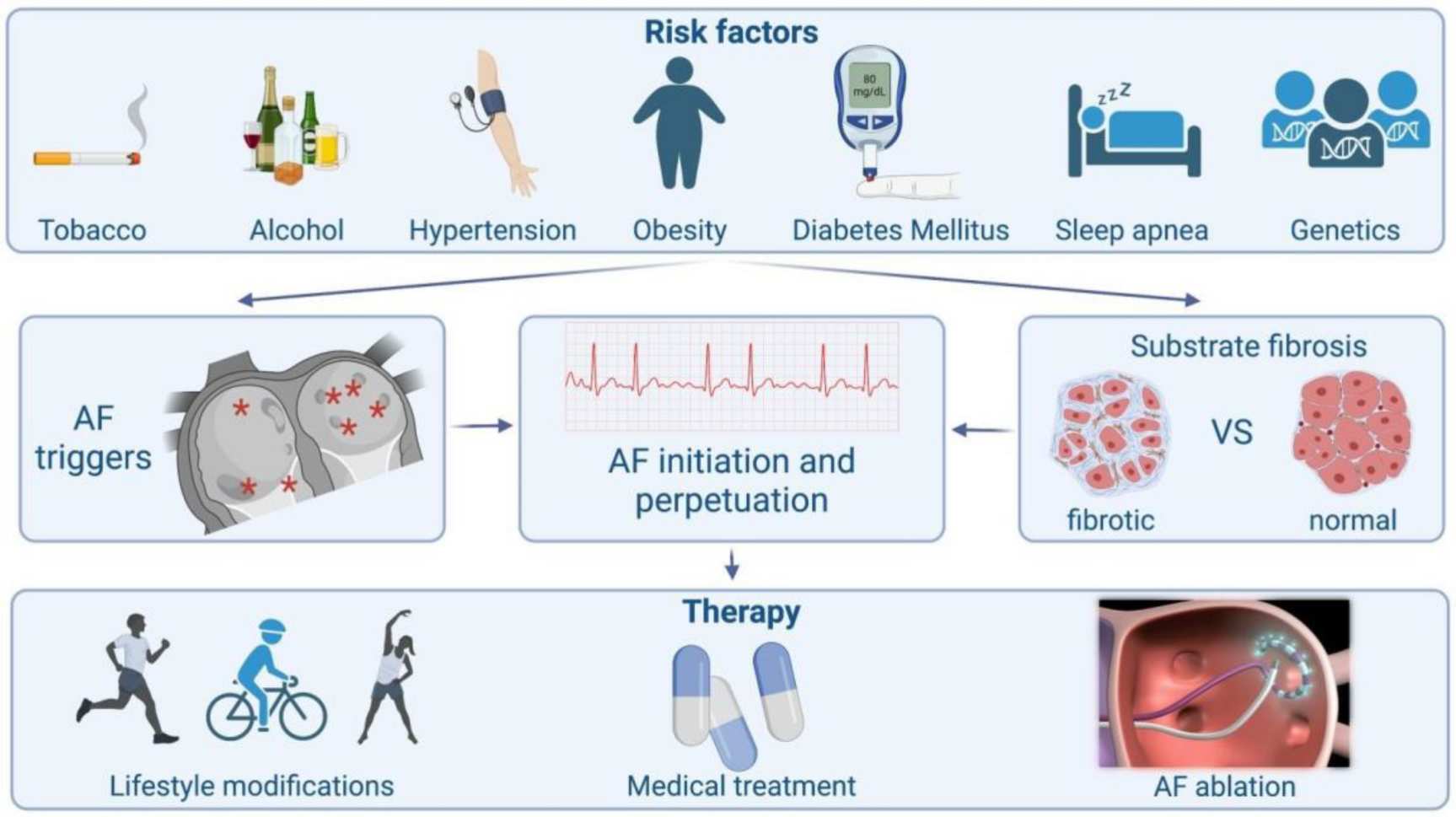 Fig.1 Schematic presentation of atrial fibrillation from causes to treatment. (Leventopoulos G, et al., 2023)
Tool #1: The Gold Standard - Electrocardiography (ECG)
The 12-lead electrocardiogram (ECG) serves as the definitive, gold-standard confirmatory tool for diagnosing atrial fibrillation (AFib) when the arrhythmia is present during the recording. It provides an immediate electrical snapshot of the heart, offering unambiguous evidence required to establish a diagnosis and initiate management.
Key Diagnostic Features
The ECG diagnosis of AFib is primarily based on two cardinal characteristics: the absence of distinct P waves, which are replaced by rapid, irregular oscillations known as fibrillatory waves (f-waves), and the presence of an "irregularly irregular" ventricular response. This means the R-R intervals—the time between successive heartbeats—follow no repeating pattern, resulting in a completely chaotic rhythm that is the hallmark of the condition.
Limitation
The primary limitation of a standard 12-lead ECG is its brief snapshot nature, typically capturing only 10 seconds of cardiac activity. This makes it insufficient for detecting paroxysmal (intermittent) AFib, which may not occur during the recording. Consequently, a single normal ECG cannot rule out AFib in a patient with suggestive symptoms, necessitating the use of extended ambulatory monitoring for a comprehensive evaluation.
Tool #2: Capturing the Elusive - Ambulatory Cardiac Monitoring
For patients with suspected paroxysmal atrial fibrillation (AFib), a standard ECG often fails to capture the intermittent arrhythmic events. Ambulatory cardiac monitoring effectively extends the diagnostic observation window from minutes to years, providing a practical solution for diagnosing these elusive, transient episodes by continuously or frequently recording the heart's electrical activity during a patient's daily life. The main monitors include:
Holter Monitors
Holter Monitors are portable devices typically worn for 24 to 48 hours that provide a continuous recording of the heart's rhythm. They are ideal for capturing frequent arrhythmic events that are likely to occur within a short monitoring period.
Event Monitors
Event Monitors are designed to be worn for several weeks and are primarily used for capturing less frequent symptoms. Patients activate the device during a symptomatic episode, which then saves a recording of the rhythm from the moments before, during, and after the trigger.
Implantable Loop Recorders
ILRs are small, subcutaneous devices implanted under the skin of the chest for long-term monitoring, typically lasting up to three years. They operate automatically and continuously, making them the ultimate tool for diagnosing very infrequent, unexplained events.
Tool #3: The Essential Biomarkers - Uncovering Cause and Consequence
While ECG and monitoring confirm if atrial fibrillation (AFib) is present, essential biomarkers provide the critical context to understand why it occurred and what its impact on the heart has been. This laboratory-based diagnostic layer moves beyond rhythm confirmation to uncover underlying etiologies, assess the resulting hemodynamic stress, and guide comprehensive management strategies, making it an indispensable component of the AFib workup.
BNP / NT-proBNP
BNP / NT-proBNP plays a dual role in AFib assessment. Firstly, it serves as a key screening tool for identifying underlying heart failure, a condition that is both a major cause and a common consequence of the arrhythmia. Secondly, it acts as a sensitive indicator of the hemodynamic consequence of AFib itself, as the rapid, irregular rhythm can lead to elevated atrial pressures and subsequent ventricular stretch, providing crucial prognostic information.
Thyroid-Stimulating Hormone (TSH)
Thyroid-stimulating hormone (TSH) measurement is a mandatory test in the initial evaluation of any new-onset AFib. Its primary role is to rule out hyperthyroidism (thyrotoxicosis), a well-established and often reversible cause of the arrhythmia. Identifying and treating this underlying endocrine disorder can sometimes resolve the AFib entirely, avoiding the need for long-term rhythm-control therapies.
High-Sensitivity Troponin
High-sensitivity troponin is utilized to detect subtle myocardial injury that can occur secondary to the rapid ventricular rates in AFib, which increase myocardial oxygen demand and can induce supply-demand ischemia. Furthermore, it is critical for differentiating the diagnosis and ruling out an acute coronary syndrome (ACS) in AFib patients who present with chest pain, ensuring appropriate and timely management.
Featured Products for Atrial Fibrillation (AFib) Diagnostics
Alta DiagnoTech's comprehensive portfolio of IVD and research solutions enables a complete diagnostic workflow for atrial fibrillation (AFib), from initial clinical assessment to advanced biomarker discovery. These reliable testing solutions equip clinicians with essential information for accurate diagnosis and risk stratification, while providing researchers with robust tools to investigate new biomarkers and disease mechanisms for diagnostic applications. If you have related needs, please feel free to contact us for more information or product support.
| Product Name |
Technology |
Application |
| NT-proBNP Assay |
Chemiluminescent Immunoassay (CLIA) |
Quantitative measurement for heart failure screening and hemodynamic assessment in AFib patients (IVD) |
| High-Sensitivity Troponin I Assay |
Chemiluminescent Immunoassay (CLIA) |
Precise detection of myocardial injury in patients with arrhythmia (IVD) |
| TSH Assay |
Chemiluminescent Immunoassay (CLIA) |
Sensitive measurement of thyroid-stimulating hormone to rule out hyperthyroidism as a cause of AFib (IVD) |
| Human ANP ELISA Kit |
Enzyme-Linked Immunosorbent Assay |
Quantitative detection of Atrial Natriuretic Peptide for AFib pathophysiology research (Research Use Only) |
| Human GDF-15 ELISA Kit |
Enzyme-Linked Immunosorbent Assay |
Measurement of Growth Differentiation Factor-15 for cardiac remodeling studies in AFib (Research Use Only) |
| Electrolyte Panel Assay |
Ion-Selective Electrode (ISE) |
Simultaneous measurement of potassium, sodium, and chloride levels for arrhythmia risk assessment (IVD) |
Reference
- Leventopoulos G, Koros R, Travlos C, et al. Mechanisms of atrial fibrillation: how our knowledge affects clinical practice[J]. Life, 2023, 13(6): 1260.
This article is for research use only. Do not use in any diagnostic or therapeutic application.