Novel PCR Assay for Invasive Aspergillosis Diagnosis and Azole-Resistance Detection
Aspergillosis, a spectrum of diseases caused by fungi within the genus Aspergillus, poses a significant health threat worldwide, particularly to immunocompromised individuals. The most pathogenic species, Aspergillus fumigatus, is responsible for a range of clinical manifestations, from allergic reactions to life-threatening invasive infections. Invasive aspergillosis (IA) is a severe condition with high mortality rates, especially in patients with hematological malignancies, organ transplant recipients, and those on prolonged corticosteroid therapy. Early and accurate diagnosis is crucial for initiating appropriate antifungal therapy and improving patient outcomes.
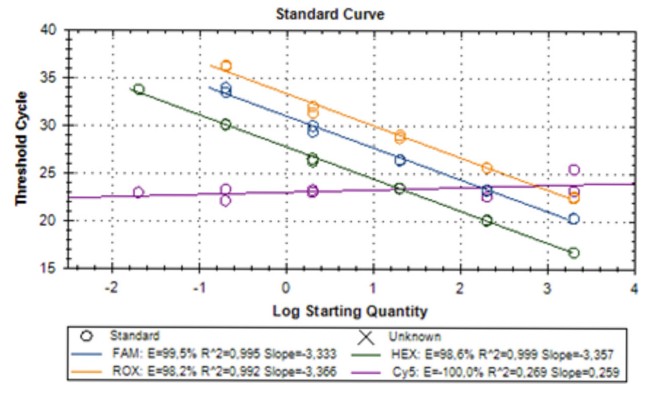 Fig.1 Analytical performance of the MycoGENIE real-time PCR. The efficiency and dynamic range of the PCR are shown. (Dannaou E., et al., 2017)
Challenges in Diagnosing Aspergillosis
Clinical and Radiological Ambiguity
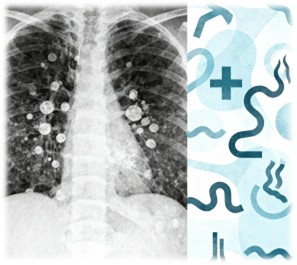
Diagnosing aspergillosis remains challenging due to the non-specific nature of clinical symptoms and radiological findings. Patients with IA often present with fever, cough, dyspnea, and chest pain, symptoms that overlap with various other pulmonary infections. Radiological imaging, such as computed tomography (CT), may reveal nodules, cavities, or ground-glass opacities, but these findings are not pathognomonic for aspergillosis. Consequently, reliance on clinical and radiological criteria alone can lead to misdiagnosis and delayed treatment.
Limitations of Conventional Diagnostic Methods
Traditional diagnostic methods for aspergillosis include direct microscopy, culture, and histopathological examination. While these techniques are valuable, they suffer from several limitations. Direct microscopy has low sensitivity, especially in non-invasive samples. Culture, although specific, is time-consuming and may yield false-negative results due to prior antifungal therapy or fastidious growth requirements. Histopathological examination requires invasive procedures, such as lung biopsy, which may not be feasible in critically ill patients.
Molecular Diagnostics: A Paradigm Shift
The Advent of PCR-Based Assays
The limitations of conventional diagnostic methods have necessitated the development of more sensitive and rapid techniques. Molecular diagnostics, particularly polymerase chain reaction (PCR)-based assays, have emerged as a promising alternative. PCR allows for the amplification and detection of specific fungal DNA sequences, enabling early and accurate diagnosis of aspergillosis.
The MycoGENIE A. fumigatus Real-Time PCR Kit
Among the various PCR-based assays available, the MycoGENIE A. fumigatus real-time PCR kit stands out as a novel and commercially viable option. This multiplex assay is designed to detect DNA from the A. fumigatus species complex by targeting the multicopy 28S rRNA gene. Additionally, it identifies specific mutations (TR34 and L98H) in the single-copy-number cyp51A gene, which are associated with azole resistance—a growing concern in the management of aspergillosis.
Performance Evaluation of the MycoGENIE Kit
Analytical Sensitivity and Specificity
The MycoGENIE kit has demonstrated high analytical sensitivity and specificity. In a study evaluating its performance, the limit of detection (LoD) for the Aspergillus 28S rRNA gene was found to be less than one copy, while the LoD for the cyp51A gene harboring the TR34 and L98H mutations was six copies. No cross-reactivity was detected with various other fungi and bacteria, indicating excellent specificity.
Clinical Validation
Clinical validation of the MycoGENIE kit involved testing respiratory and serum samples from patients with proven or probable aspergillosis. Among respiratory samples, the sensitivity and specificity were 92.9% and 90.1%, respectively. For serum samples, the sensitivity reached 100%, with a specificity of 84.6%. These results underscore the kit's potential for accurate diagnosis in both sample types.
Comparison with Other PCR Assays
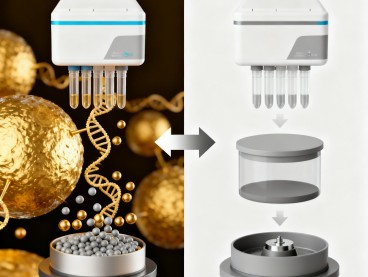
The performance of the MycoGENIE kit is comparable to that of other commercially available PCR assays, such as the AsperGenius kit. Both kits combine the detection of Aspergillus DNA with the identification of cyp51A mutations associated with azole resistance. However, the MycoGENIE kit's optimized DNA extraction protocol and efficient magnetic particle-based extraction method contribute to its high sensitivity, particularly in serum samples.
Azole Resistance in Aspergillus fumigatus: A Growing Concern
- Emergence of Azole Resistance
Azole antifungals, particularly voriconazole and isavuconazole, are the first-line treatment for IA. However, the emergence of azole-resistant A. fumigatus isolates poses a significant therapeutic challenge. Acquired azole resistance has been reported since the late 1990s and has emerged in many countries, primarily due to the selection pressure from azole fungicides used in agriculture.
- Mechanisms of Azole Resistance
Azole resistance in A. fumigatus is mainly associated with mutations in the cyp51A gene, which encodes the target enzyme of azoles, lanosterol 14α-demethylase. The most frequent mutation is the combination of a 34-bp tandem repeat (TR34) in the promoter region and a leucine-to-histidine substitution at codon 98 (L98H). This alteration leads to reduced azole binding and increased fungal survival in the presence of these drugs.
- Clinical Implications of Azole Resistance
The presence of azole-resistant A. fumigatus isolates has been linked to increased clinical failure rates. Patients infected with resistant strains often exhibit poorer responses to azole therapy, necessitating alternative treatment strategies, such as the use of polyenes or echinocandins. Routine antifungal susceptibility testing (AFST) of clinical isolates is recommended to guide appropriate therapy. However, isolates are not always retrievable, particularly in patients with hematological malignancies. Molecular detection of resistance markers, therefore, offers a valuable alternative.
The Future of Aspergillosis Diagnosis and Management
- Advancements in Molecular Diagnostics
Continued advancements in molecular diagnostics hold promise for further improving the diagnosis and management of aspergillosis. Next-generation sequencing (NGS) technologies, for instance, offer the potential for comprehensive fungal genome analysis, enabling the detection of multiple resistance mutations simultaneously. Additionally, the development of point-of-care PCR assays could facilitate rapid diagnosis in resource-limited settings.
- Multidisciplinary Approaches to Patient Care
Effective management of aspergillosis requires a multidisciplinary approach, involving infectious disease specialists, pulmonologists, hematologists, and microbiologists. Close collaboration among these experts ensures timely diagnosis, appropriate antifungal therapy, and monitoring for treatment response and adverse events.
- Global Surveillance of Azole Resistance
Given the global emergence of azole-resistant A. fumigatus, international surveillance programs are essential. These initiatives facilitate the collection and analysis of resistance data, enabling the identification of emerging trends and the implementation of targeted infection control measures.
If you have related needs, please feel free to contact us for more information or product support.
Reference
- Dannaoui, Eric, et al. "Molecular diagnosis of invasive aspergillosis and detection of azole resistance by a newly commercialized PCR kit." Journal of clinical microbiology 55.11 (2017): 3210-3218.
We provide molecular diagnostic kits, which are efficient tools designed for molecular biology research and clinical diagnosis and can accurately detect changes in nucleic acid (DNA/RNA) sequences, structures, or expression levels in biological samples, which help medical research such as disease diagnosis, pathogen detection, and genetic disease screening. Specifically covering the following types:
This article is for research use only. Do not use in any diagnostic or therapeutic application.