Cholangiocarcinoma is a rare and aggressive malignancy originating from the bile ducts, characterized by diagnostic challenges and poor prognosis due to frequent late-stage detection. This resource provides a comprehensive overview of the modern diagnostic approach for this disease, detailing the integrated clinical pathway from initial imaging and serum biomarker analysis to definitive cytological and molecular confirmation.
Overview of Cholangiocarcinoma
Cholangiocarcinoma (CCA) is a rare but highly aggressive malignancy arising from the epithelial cells of the bile ducts, classified anatomically into intrahepatic, perihilar, and distal subtypes. It is characterized by insidious onset, nonspecific symptoms, and a generally poor prognosis, largely due to late-stage diagnosis. Risk factors include primary sclerosing cholangitis, liver fluke infections, and metabolic syndromes. Diagnosis relies on a multimodal approach integrating advanced imaging, histopathological confirmation, and supportive serum biomarkers, with an increasing emphasis on molecular profiling to guide targeted therapeutic strategies.
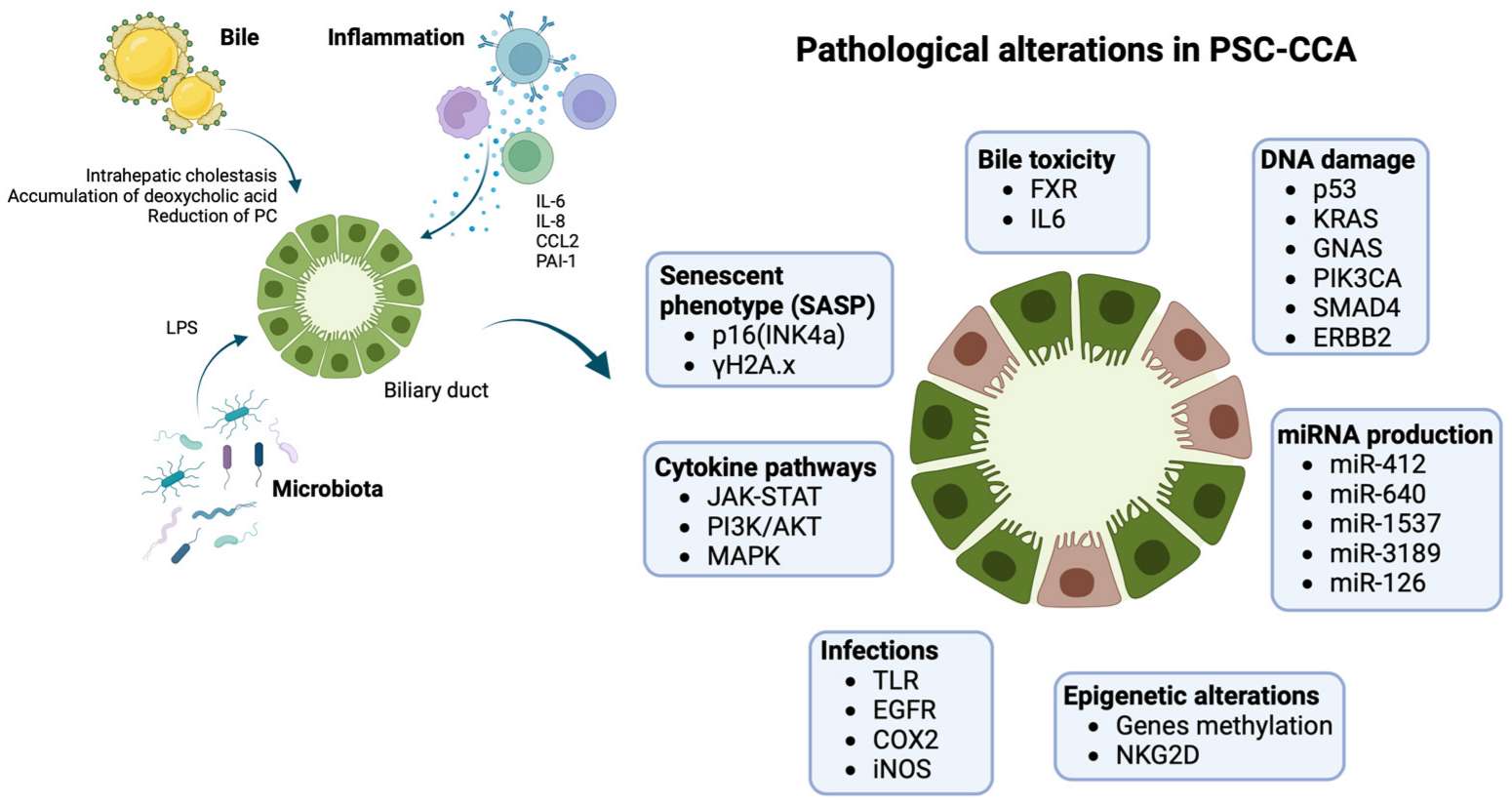 Fig.1 Pathogenesis of primary sclerosing cholangitis-cholangiocarcinoma (PSC-CCA). (Catanzaro E, et al., 2023)
Imaging Modalities for Cholangiocarcinoma Diagnostics
Imaging plays a fundamental role in the diagnosis and staging of cholangiocarcinoma, providing essential information about tumor location, extent, and resectability. These modalities guide subsequent diagnostic procedures and therapeutic planning, forming a critical component of the multidisciplinary management approach.
Abdominal Ultrasound
Abdominal ultrasound serves as the initial imaging modality, effectively detecting biliary duct dilation and identifying mass lesions, particularly in intrahepatic subtypes. Its non-invasive nature and accessibility make it invaluable for initial assessment, though it has limited sensitivity for detecting early-stage or infiltrative tumors.
Computed Tomography (CT) & Magnetic Resonance Imaging (MRI/MRCP)
CT provides detailed cross-sectional imaging for comprehensive staging and assessment of vascular involvement, while MRI with MRCP offers superior soft tissue characterization and non-invasive mapping of the biliary tree. These complementary techniques are essential for determining tumor resectability and surgical planning.
Endoscopic & Cholangioscopy
Endoscopic ultrasound (EUS) enables high-resolution imaging and guided fine-needle aspiration for tissue diagnosis, while cholangioscopy allows direct visualization of the biliary lumen and targeted biopsies. These advanced endoscopic techniques significantly improve diagnostic accuracy, particularly for indeterminate strictures and early-stage lesions.
Serum Biomarkers for Cholangiocarcinoma Diagnostics
Serum biomarkers provide crucial non-invasive tools for supporting the diagnosis, monitoring treatment response, and assessing prognosis in cholangiocarcinoma. While no single biomarker offers perfect specificity, their strategic use in combination with imaging and histology significantly enhances clinical decision-making, particularly in high-risk populations.
- Carbohydrate Antigen 19-9 (CA 19-9): The most widely used biomarker, though levels can be elevated in other malignancies and benign biliary conditions.
- Carcinoembryonic Antigen (CEA): Often used alongside CA 19-9 to aid in differential diagnosis and prognosis.
- Alpha-fetoprotein (AFP): Primarily valuable for distinguishing cholangiocarcinoma from hepatocellular carcinoma.
- Immunoglobulin G4 (IgG4): Critical for excluding IgG4-related sclerosing cholangitis, a benign condition that can mimic cholangiocarcinoma.
- Circulating Tumor DNA (ctDNA): An emerging biomarker for detecting tumor-specific mutations (e.g., IDH1, FGFR2 fusions) and monitoring minimal residual disease.
Cytological and Tissue Diagnosis of Cholangiocarcinoma
Cytological and tissue diagnosis represents the definitive method for confirming cholangiocarcinoma, providing essential pathological characterization that guides therapeutic decisions. This diagnostic approach faces unique challenges due to the tumor's desmoplastic nature and often difficult anatomical location, requiring specialized techniques to obtain adequate samples for accurate diagnosis. Key diagnostic methods include:
- Endoscopic Retrograde Cholangiopancreatography with Brushing: ERCP with biliary brushing serves as the primary minimally invasive technique for cytological sampling. While specific, its sensitivity remains limited (30-50%), often requiring repeated procedures or complementary testing.
- Fluorescence In Situ Hybridization: FISH technology significantly enhances diagnostic capability by detecting chromosomal abnormalities, particularly polysomy, in biliary specimens. This method improves sensitivity to 60-70% while maintaining high specificity, making it especially valuable for patients with primary sclerosing cholangitis.
- Tissue Biopsy Techniques: Percutaneous, endoscopic ultrasound-guided, or surgical biopsies provide tissue architecture for definitive diagnosis. Core needle biopsies are preferred over fine-needle aspiration as they preserve histological structure necessary for subtyping and grading.
- Advanced Molecular Analysis: Next-generation sequencing of obtained tissue or cytology specimens can identify actionable mutations, including IDH1/2, FGFR2 fusions, and BRAF alterations, which have significant implications for targeted therapy selection.
Molecular Diagnostics of Cholangiocarcinoma
Molecular diagnostics is revolutionizing the management of cholangiocarcinoma by enabling precise tumor characterization and personalized treatment strategies. This approach focuses on identifying specific genomic alterations that drive tumor progression, providing critical information beyond conventional histopathology. Key aspects include:
Genomic Profiling
Next-generation sequencing panels systematically detect targetable mutations, including *IDH1/2* mutations, FGFR2 fusions, and BRAF V600E alterations, which directly inform therapeutic selection.
Microsatellite Instability Testing
Assessment of microsatellite instability (MSI) status identifies patients who may benefit from immunotherapy, adding a crucial dimension to treatment planning.
Circulating Tumor DNA Analysis
Liquid biopsy approaches allow for non-invasive tumor genotyping and monitoring of treatment response, particularly valuable when tissue sampling is challenging.
Featured Products for Cholangiocarcinoma Diagnostics
Facing the diagnostic difficulties posed by cholangiocarcinoma's nonspecific presentation and complex pathogenesis, Alta DiagnoTech focuses on delivering comprehensive testing solutions that unify serological, cytological and molecular approaches. Our robust assay systems generate reliable diagnostic and prognostic data, helping clinicians navigate the entire patient management pathway from initial detection to treatment guidance. If you have related needs, please feel free to contact us for more information or product support.
| Product Name |
Technology |
Application |
| CA 19-9 Quantitative Assay |
Chemiluminescent Immunoassay (CLIA) |
Serum-based detection and monitoring |
| Biliary FISH Polysomy Detection Kit |
Fluorescence In Situ Hybridization (FISH) |
Enhanced cytological diagnosis from biliary brushings |
| IDH1/2 Mutation Detection Kit |
Next-Generation Sequencing (NGS) |
Molecular subtyping and targeted therapy selection |
| FGFR2 Fusion Detection Assay |
RT-PCR/NGS |
Identification of actionable genomic alterations |
| Circulating Tumor DNA (ctDNA) Panel |
Digital PCR/NGS |
Minimally invasive molecular profiling and monitoring |
| Tissue Preservation Solution for Biliary Specimens |
Specialized Transport Medium |
Optimal sample preservation for morphological and molecular analysis |
Reference
- Catanzaro E, Gringeri E, Burra P, et al. Primary sclerosing cholangitis-associated cholangiocarcinoma: from pathogenesis to diagnostic and surveillance strategies[J]. Cancers, 2023, 15(20): 4947.
This article is for research use only. Do not use in any diagnostic or therapeutic application.