Harnessing the Power of Magnetic Nanoparticles: A Cost-Effective Strategy for COVID-19 Antibody and Antigen Production
  • Home
  • Resource
  • Explore & Learn
  • Harnessing the Power of Magnetic Nanoparticles: A Cost-Effective Strategy for COVID-19 Antibody and Antigen Production

Harnessing the Power of Magnetic Nanoparticles: A Cost-Effective Strategy for COVID-19 Antibody and Antigen Production

The COVID-19 pandemic has underscored the critical importance of rapid, accurate, and cost-effective diagnostic tools. The global healthcare system faced unprecedented challenges due to supply shortages of essential diagnostic components, particularly antibodies and antigens. These components are vital for developing immunological-based tests, including point-of-care (POC) diagnostics, which offer portability, ease of use, and affordability.

Traditional methods for producing monoclonal antibodies (mAbs) involve complex and expensive processes, often limiting their accessibility during pandemics. In contrast, polyclonal antibodies (pAbs) offer a more flexible and cost-effective alternative, capable of targeting multiple epitopes and tolerating minor antigenic variations. This article explores the innovative use of magnetic nanoparticles (MNPs) to repurpose infected human samples for the production of cost-effective COVID-19 antibodies and antigens, providing a sustainable solution for diagnostic needs.

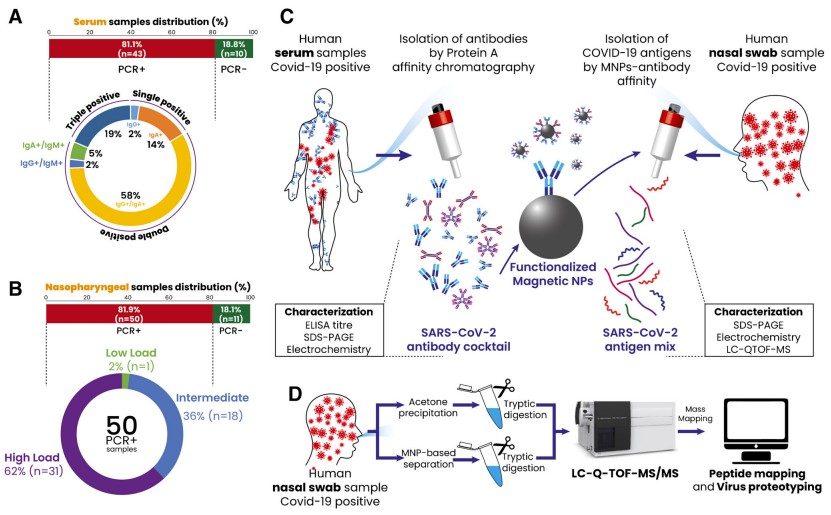
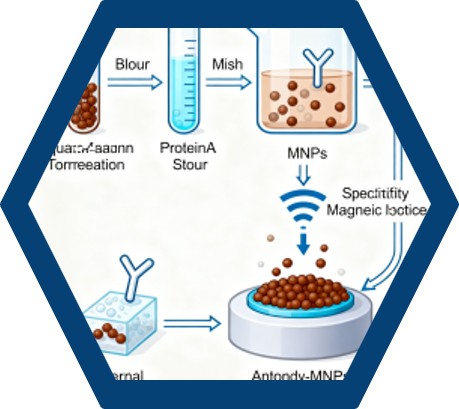
Overview diagram summarizing the experimental framework of the present investigation. Fig.1 Schematic illustration of the current study design. (Tok K., et al., 2021)

Magnetic Nanoparticles: A Versatile Tool for Biomolecule Separation

Principles of MNP-Based Separation

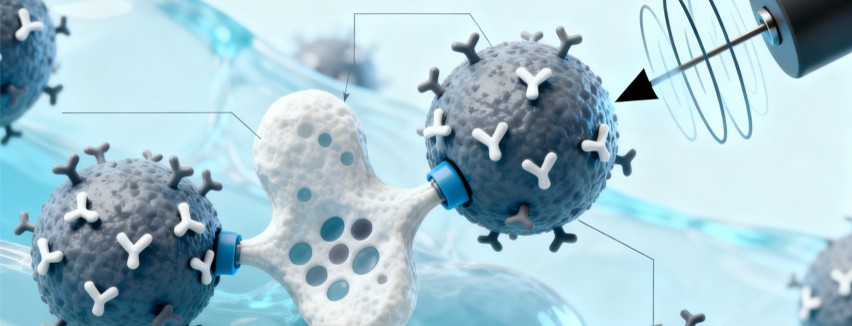
Magnetic nanoparticles (MNPs) have emerged as powerful tools in biotechnology due to their unique properties. These nanoparticles can be functionalized with specific biomolecules, such as antibodies, enabling the selective capture and separation of target antigens from complex biological samples. The process involves mixing the functionalized MNPs with the sample, allowing the target molecules to bind to the antibodies on the MNP surface. Subsequently, an external magnetic field is applied to immobilize the MNPs, facilitating the separation of the bound targets from the rest of the sample.

Advantages of MNPs in Diagnostic Applications

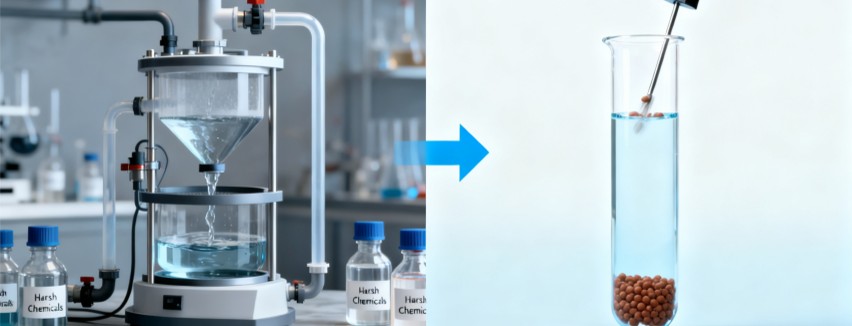
MNPs offer several advantages over traditional separation methods. Firstly, they provide a rapid and efficient means of isolating biomolecules, reducing the time and labor required for purification. Secondly, MNPs can be easily functionalized with a wide range of biomolecules, enhancing their versatility in different diagnostic applications. Thirdly, the magnetic separation process is gentle and does not require harsh chemicals, preserving the integrity of the isolated biomolecules. Finally, MNPs can be reused after simple washing procedures, making them a cost-effective option for large-scale applications.

Repurposing Infected Human Samples: A Sustainable Approach

Sample Collection and Selection

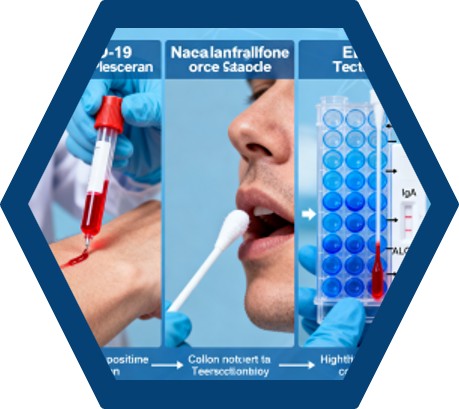
The repurposing of infected human samples, such as serums and nasopharyngeal swabs, offers a sustainable and cost-effective approach to producing COVID-19 antibodies and antigens. Samples are collected from COVID-19-positive patients and rigorously tested for the presence of specific antibodies (IgG, IgA, IgM) using ELISA kits. High-titer samples are then pooled together for subsequent purification steps.

Antibody Purification Using MNPs

The purification of antibodies from serum samples involves a series of steps. Initially, the serum is subjected to ammonium sulfate precipitation to concentrate the immunoglobulins. The precipitated sample is then dialyzed and applied to an immunoaffinity spin column containing protein A, which selectively binds to the antibodies. The eluted fractions, enriched with purified antibodies, are combined and concentrated for further use.

To enhance the purification process, MNPs functionalized with protein A can be employed. These MNPs provide a larger surface area for antibody binding, increasing the yield and purity of the isolated antibodies. The functionalized MNPs are mixed with the serum sample, allowing the antibodies to bind to the protein A on the MNP surface. An external magnetic field is then applied to separate the MNPs-antibody complex from the rest of the sample, followed by elution of the purified antibodies.


Antigen Separation Using Antibody-Functionalized MNPs

The purified antibodies can be further utilized to separate antigens from nasopharyngeal swab samples. The antibodies are conjugated to MNPs, creating an immunoaffinity system capable of selectively capturing SARS-CoV-2 antigens. Swab samples with high viral loads, identified through RT-PCR, are pooled and mixed with the antibody-functionalized MNPs. The antigens bind to the antibodies on the MNP surface, and an external magnetic field is applied to separate the MNPs-antigen complex. The purified antigens are then eluted and characterized using various analytical methods.

Characterization and Validation of Purified Antibodies and Antigens

  • Analytical Techniques for Characterization
    The characterization of purified antibodies and antigens involves a range of analytical techniques. Electrophoresis (SDS-PAGE) is used to assess the purity and molecular weight of the isolated proteins. ELISA kits are employed to confirm the specificity and titer of the purified antibodies. Electrochemical analysis, using screen-printed electrodes (SPEs), provides a sensitive and rapid means of detecting antibody-antigen interactions. Isothermal titration calorimetry (ITC) measures the physical binding interactions between antibodies and antigens, offering insights into their affinity and stoichiometry.
  • Mass Spectrometry for Protein Identification
    Mass spectrometry (MS) plays a crucial role in validating the identity and purity of the purified antibodies and antigens. Liquid chromatography quadrupole time-of-flight mass spectrometry (LC-Q-TOF-MS/MS) enables the identification of specific peptides and proteins by comparing their mass spectra against known databases. This technique confirms the presence of SARS-CoV-2-specific antigens and antibodies, ensuring their suitability for diagnostic applications.
  • Development of Paper-Based Lateral Flow Assays
    As a proof of concept, the purified antibodies and antigens are utilized to develop paper-based lateral flow assays (LFAs) for the detection of SARS-CoV-2. These LFAs offer a portable, rapid, and cost-effective means of diagnosing COVID-19. The platform consists of a nitrocellulose membrane with test and control lines. The sample is applied to the membrane, and the purified antibodies or antigens capture the target molecules, producing a visible signal. The LFAs demonstrate high sensitivity and specificity, comparable to RT-PCR and commercial ELISA kits, making them a valuable tool for large-scale screening efforts.

If you have related needs, please feel free to contact us for more information or product support.

Reference

  1. Tok, Kerem, et al. "Simple workflow to repurpose SARS-CoV-2 swab/serum samples for the isolation of cost-effective antibody/antigens for proteotyping applications and diagnosis." Analytical and bioanalytical chemistry 413.29 (2021): 7251-7263.

This article is for research use only. Do not use in any diagnostic or therapeutic application.

Get in Touch
0
0

There is no product in your cart.