From Suspicion to Confirmation: Navigating the Diagnostic Journey for Alpha-1 Antitrypsin Deficiency (AATD)
Alpha-1 antitrypsin deficiency (AATD) is an underdiagnosed genetic disorder that can lead to severe lung and liver disease, often after a significant diagnostic delay. This comprehensive resource details the complete diagnostic pathway for AATD, guiding you from recognizing the initial clinical clues to confirming the diagnosis with specialized testing.
Overview of Alpha-1 Antitrypsin Deficiency (AATD)
Alpha-1 antitrypsin deficiency (AATD) is a genetic disorder primarily caused by mutations in the SERPINA1 gene, leading to significantly reduced levels or dysfunction of the alpha-1 antitrypsin (AAT) protein in the blood. This protein, normally produced by the liver, plays a critical protective role by inhibiting enzymes like neutrophil elastase that can damage lung tissue. Its deficiency results in an imbalance, allowing these enzymes to attack and progressively destroy the alveoli, which most commonly manifests as early-onset emphysema, chronic obstructive pulmonary disease (COPD), and liver diseases such as cirrhosis in adults and children. The disease is greatly underdiagnosed, with an average delay of over five years from symptom onset to confirmation, highlighting the critical need for increased clinical suspicion and systematic testing, particularly in individuals with a family history or unexplained respiratory or hepatic conditions.
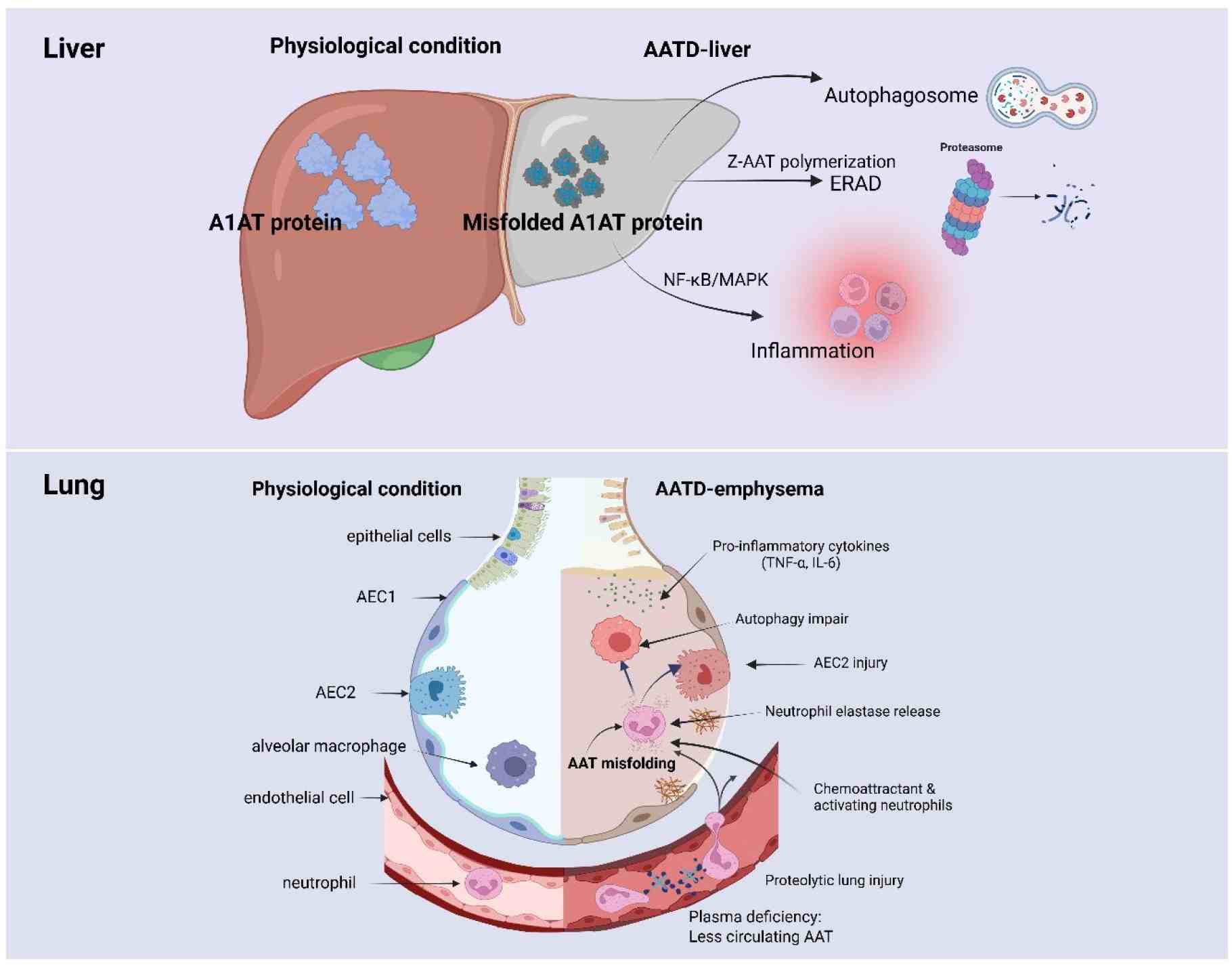 Fig.1 Pathophysiological mechanism of AATD-associated liver and lung injury. (Yang, et al., 2025)
Recognizing the Clues – When to Suspect AATD
Alpha-1 antitrypsin deficiency (AATD) should be suspected in three primary clinical scenarios. First, in individuals with unexplained, early-onset obstructive lung disease, such as emphysema or COPD diagnosed before the age of 55, especially in non-smokers or with a basilar-predominant pattern on imaging. Second, in cases of unexplained liver disease, including cirrhosis in adults, persistently elevated liver enzymes, or neonatal hepatitis. Third, a significant family history is a major clue, including a known diagnosis of AATD in a relative or a family history of COPD, bronchiectasis, or liver disease. Additionally, presentation with necrotizing panniculitis or ANCA-positive vasculitis should also prompt investigation. Recognizing these patterns is essential to ending the typical diagnostic delay of over five years.
The First Steps – Initial Screening and Evaluation
The initial evaluation for suspected alpha-1 antitrypsin deficiency (AATD) is a critical, two-pronged approach designed to efficiently identify a biochemical deficiency and concurrently assess potential organ impact. This stage moves from clinical suspicion to actionable data, combining a single, definitive blood test with baseline assessments of lung and liver function to guide all subsequent diagnostic and management steps.
AAT Serum Level Test
The first and most crucial laboratory step is measuring the alpha-1 antitrypsin (AAT) protein level in the blood, typically via a simple immunoassay such as nephelometry. This quantitative test identifies individuals with a deficiency (commonly defined as a serum level below the protective threshold of approximately 11 µM or 50 mg/dL). It is important to interpret this result in context, as AAT is an acute-phase reactant; levels can be falsely normal during active inflammation, infection, or pregnancy, which may mask an underlying deficiency. Therefore, a low level is a strong indicator, but a normal level does not fully rule out AATD in high-risk individuals, necessitating further testing.
The Initial Clinical Work-up
Concurrently with the AAT level test, an initial clinical assessment is performed to evaluate potential organ damage. This minimally includes spirometry (a lung function test) to objectively document the presence and severity of airflow obstruction indicative of COPD/emphysema, and routine liver function tests (LFTs) (such as ALT, AST, and bilirubin) to screen for hepatic involvement. This parallel work-up provides an immediate snapshot of disease manifestation, helping to prioritize urgent care needs and shape the focus of the more specialized testing that follows a confirmed diagnosis.
Confirmatory Testing and Diagnosis of AATD
Following a low serum alpha-1 antitrypsin (AAT) level, confirmatory testing is essential to definitively diagnose alpha-1 antitrypsin deficiency (AATD) and establish the specific genetic cause. This stage moves from a biochemical indication to a precise genotypic diagnosis, which is critical for determining prognosis, guiding management, and facilitating family screening.
Genetic Testing (SERPINA1 Genotyping)
The definitive diagnostic step is SERPINA1 genotyping, which identifies the specific allelic variants (e.g., the PiZ and PiS alleles) inherited by the patient. This is typically performed via PCR-based methods or sequencing on a blood sample. This test confirms the diagnosis, distinguishes between homozygous (e.g., PiZZ) and heterozygous states (e.g., PiMZ), and identifies rare or null alleles, providing information crucial for assessing disease risk and inheritance patterns. Genetic counseling is strongly recommended both before and after this test to discuss the personal and familial implications of the results.
Understanding Your Diagnosis
A confirmed diagnosis is defined by the genotype-phenotype correlation. The PiZZ genotype is associated with the most severe deficiency and highest risk of lung and liver disease. Other genotypes like PiSZ confer significant risk, while Pi*MZ (heterozygous carriers) may have a modestly increased risk, particularly with additional liver insults. This precise diagnosis is not merely a label; it directly informs a personalized management plan, determining eligibility for targeted therapies like augmentation therapy, dictating the frequency of liver and lung monitoring, and providing a clear rationale for testing at-risk family members.
IVD Products for Alpha-1 Antitrypsin Deficiency (AATD)
With a commitment to advancing precision diagnostics and addressing critical gaps in rare disease detection, Alta DiagnoTech provides comprehensive in vitro diagnostic (IVD) solutions for alpha-1 antitrypsin deficiency (AATD). Our offerings address the entire diagnostic pathway from initial suspicion to confirmatory genotyping, and our portfolio is designed to overcome the challenge of underdiagnosis by offering precise and reliable tools. If you have related needs, please feel free to contact us for more information or product support.
| Product Name |
Technology |
Application |
| Serum A1AT Quantitative Assay Kit |
Immunoturbidimetry / Nephelometry |
Quantitative measurement of Alpha-1 Antitrypsin protein levels in human serum or plasma for initial deficiency screening. |
| PCR-Based AATD Genotyping Kit (S/Z Alleles) |
Real-Time Polymerase Chain Reaction (RT-PCR) |
Targeted detection of the most common pathogenic SERPINA1 gene alleles (S and Z) for rapid confirmatory testing and genotyping. |
| Comprehensive SERPINA1 Gene Sequencing Assay |
Next-Generation Sequencing (NGS) |
Full-gene analysis to identify common, rare, and novel variants across the SERPINA1 gene coding region for complex or atypical cases. |
| A1AT Isoelectric Focusing (IEF) Phenotyping Kit |
Isoelectric Focusing (IEF) |
Protein-based separation and identification of Alpha-1 Antitrypsin isoforms (Pi-typing) to confirm genotype and detect rare variants. |
| Integrated AATD Screening & Genotyping System |
Automated Immunoassay with Reflex PCR |
Combined quantitative A1AT measurement with automatic reflex to PCR-based genotyping in a single, closed cartridge system for streamlined workflow. |
Reference
- Yang, Se-Ran, and Hyung-Ryong Kim. "Next-Generation Regenerative Therapies for Alpha-1 Antitrypsin Deficiency: Molecular Pathogenesis to Clinical Translation." International Journal of Molecular Sciences 26.17 (2025): 8504.
This article is for research use only. Do not use in any diagnostic or therapeutic application.