Vasculitis represents a group of autoimmune disorders characterized by inflammation and damage to blood vessels, leading to diverse clinical manifestations across multiple organ systems. This resource provides a comprehensive guide to the essential laboratory diagnostics for vasculitis, detailing the critical role of specific autoantibody testing, inflammatory biomarkers, and specialized serological profiles in achieving accurate diagnosis, classification, and disease monitoring.
Overview of Vasculitis
Vasculitis represents a group of uncommon disorders characterized by inflammation and damage to blood vessel walls, leading to impaired blood flow and potential tissue ischemia. This condition can affect blood vessels of any type, size, or location, resulting in a remarkably broad spectrum of clinical manifestations that depend on the specific organs involved. The underlying mechanism involves autoimmune processes where the body's immune system mistakenly attacks its own vascular tissues. Diagnosis is particularly challenging due to the variable presentation and non-specific symptoms such as fever, fatigue, weight loss, and generalized aches, often requiring a high index of suspicion and comprehensive evaluation to establish the diagnosis and determine the specific variant of vasculitis.
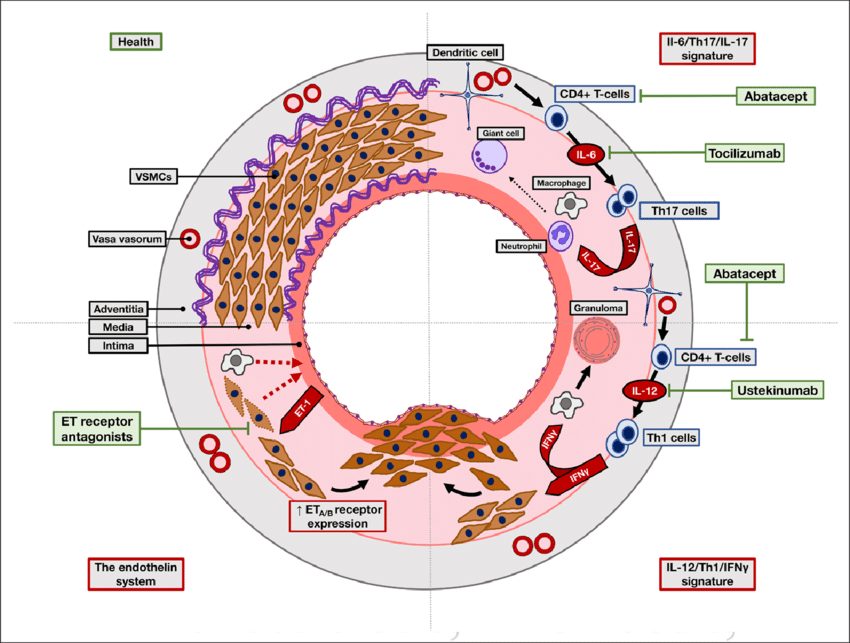 Fig.1 The pathogenesis of large vessel vasculitis (LVV). (Farrah T E, et al., 2019)
First-line Examination for Vasculitis
The initial diagnostic workup for suspected vasculitis involves a comprehensive combination of laboratory tests and imaging studies aimed at confirming the presence of systemic inflammation, identifying potential target organs, and excluding other conditions. This first-line approach is crucial for guiding subsequent, more specific diagnostic procedures and initiating timely treatment.
Laboratory Tests
- Complete blood count (CBC) to detect anemia, leukocytosis, or thrombocytosis.
- Erythrocyte sedimentation rate (ESR) and C-reactive protein (CRP) to assess for and quantify systemic inflammation.
- Comprehensive metabolic panel to evaluate renal and liver function, which are commonly affected.
- Urinalysis to check for protein, blood, or cellular casts indicating kidney involvement.
Imaging Studies
- Chest X-ray to identify large vessel involvement or lung infiltrates.
- Ultrasound for assessing blood vessel structure and blood flow, particularly in large vessels like the aorta.
ANCA Testing for Vasculitis
Antineutrophil cytoplasmic antibody (ANCA) testing is a cornerstone of modern vasculitis diagnosis, specifically for a group of conditions known as ANCA-associated vasculitides (AAV). This serological test detects autoantibodies that target specific proteins within neutrophils, playing a critical role in identifying and classifying certain primary systemic vasculitides. The interpretation of ANCA patterns and their corresponding antigen specificities provides essential information for differentiating between the main AAV subtypes, which include granulomatosis with polyangiitis (GPA), microscopic polyangiitis (MPA), and eosinophilic granulomatosis with polyangiitis (EGPA). Key aspects of ANCA testing include:
Testing Methodology
Modern testing typically involves a two-step approach, beginning with indirect immunofluorescence (IIF) to identify characteristic staining patterns (c-ANCA or p-ANCA), followed by antigen-specific immunoassays (such as ELISA) to confirm the presence of antibodies to proteinase 3 (PR3) or myeloperoxidase (MPO). This combination maximizes both sensitivity and specificity.
Clinical Correlations
A c-ANCA/PR3-ANCA pattern is strongly associated with granulomatosis with polyangiitis (GPA), while a p-ANCA/MPO-ANCA pattern is most frequently found in microscopic polyangiitis (MPA) and eosinophilic granulomatosis with polyangiitis (EGPA). The specific antigen result (PR3 vs. MPO) is now considered more reliable for diagnosis and prognostic stratification than the IIF pattern alone.
Utility and Limitations
While a positive ANCA test, particularly with high titers of PR3 or MPO antibodies, strongly supports a diagnosis of AAV in the correct clinical context, it is not a standalone diagnostic tool. Results must be interpreted alongside clinical features, histology from biopsies, and other laboratory findings. Furthermore, positive ANCA results can occasionally occur in other conditions, such as certain infections, medications, or other autoimmune diseases.
Essential Antibodies and Biomarkers for Vasculitis Diagnostics
Laboratory immunology plays a pivotal role in vasculitis diagnosis by providing specific serological markers that help classify disease subtypes, assess activity, and guide treatment. These antibodies and biomarkers target distinct components of the immune system, offering crucial insights into the underlying autoimmune pathogenesis and enabling a more precise diagnostic approach beyond clinical symptoms alone. Besides ANCA, other key antibodies and biomarkers include:
- Anti-GBM Antibodies: Essential for diagnosing Goodpasture syndrome, characterized by linear IgG deposition along glomerular and alveolar basement membranes.
- Cryoglobulins: Key markers for cryoglobulinemic vasculitis, indicating immune complex formation in response to infections like hepatitis C.
- Complement Levels (C3, C4): Critical for evaluating hypocomplementemic vasculitides, where low levels suggest immune complex-mediated pathology.
- RF and Anti-CCP Antibodies: Important for identifying rheumatoid vasculitis as a complication of established rheumatoid arthritis.
- AECA (Anti-Endothelial Cell Antibodies): Emerging biomarkers that may correlate with disease activity in various vasculitides by targeting vascular endothelial cells.
IVD Products for Vasculitis
Diagnosing vasculitis presents numerous challenges, requiring precise laboratory test results that go beyond symptom assessment. Alta DiagnoTech's specialized in vitro diagnostic (IVD) solutions deliver this crucial capability through advanced testing products, enabling clinicians to pinpoint specific autoantibodies, quantify inflammatory burden, and track disease progression. This provides the authoritative data needed to guide targeted therapy decisions and optimize prognosis for vasculitis patients. If you have related needs, please feel free to contact us for more information or product support.
| Product Name |
Technology |
Application |
| ANCA Detection Panel (IIF/PR3/MPO) |
Indirect Immunofluorescence (IIF) & Chemiluminescent Immunoassay (CLIA) |
Comprehensive detection and differentiation of ANCA patterns and specific antigens for diagnosis of ANCA-associated vasculitides. |
| Anti-GBM Antibody Assay |
Chemiluminescent Immunoassay (CLIA) |
Specific detection of anti-glomerular basement membrane antibodies for diagnosis of Goodpasture syndrome. |
| Cryoglobulin Detection Kit |
Immunofixation Electrophoresis & Cryocrit |
Identification and characterization of cryoglobulins in suspected cryoglobulinemic vasculitis. |
| Complement C3/C4 Assay |
Immunoturbidimetric Assay |
Quantitative measurement of complement levels for evaluation of immune complex-mediated vasculitides. |
| Autoimmune Inflammation Panel (CRP/ESR/RF) |
Immunoturbidimetric & Photometric Methods |
Simultaneous assessment of inflammatory markers and rheumatoid factor for initial evaluation and monitoring of vasculitis activity. |
| ANCA Detection Panel (IIF/PR3/MPO) |
Indirect Immunofluorescence (IIF) & Chemiluminescent Immunoassay (CLIA) |
Comprehensive detection and differentiation of ANCA patterns and specific antigens for diagnosis of ANCA-associated vasculitides. |
Reference
- Farrah T E, Basu N, Dweck M, et al. Advances in therapies and imaging for systemic vasculitis[J]. Arteriosclerosis, Thrombosis, and Vascular Biology, 2019, 39(8): 1520-1541.
This article is for research use only. Do not use in any diagnostic or therapeutic application.