Accurate and timely diagnosis of syphilis is crucial for effective treatment, preventing disease progression, and curbing its transmission. This resource page provides a comprehensive overview of the latest advancements in syphilis detection. It delves into traditional diagnostic methods, explores novel biomarkers that offer improved accuracy and earlier detection, and highlights emerging techniques that are revolutionizing how we identify and manage this complex infection.
Introduction to Syphilis
Syphilis is a sexually transmitted infection caused by the bacterium Treponema pallidum. It is characterized by distinct stages with various symptoms, beginning with painless sores and progressing to more severe health issues if left untreated. Syphilis can be transmitted through direct contact during sexual activity or from mother to child during pregnancy. Early diagnosis and treatment with antibiotics are crucial to prevent serious complications and transmission. Public awareness and preventive measures play a significant role in controlling the spread of syphilis.
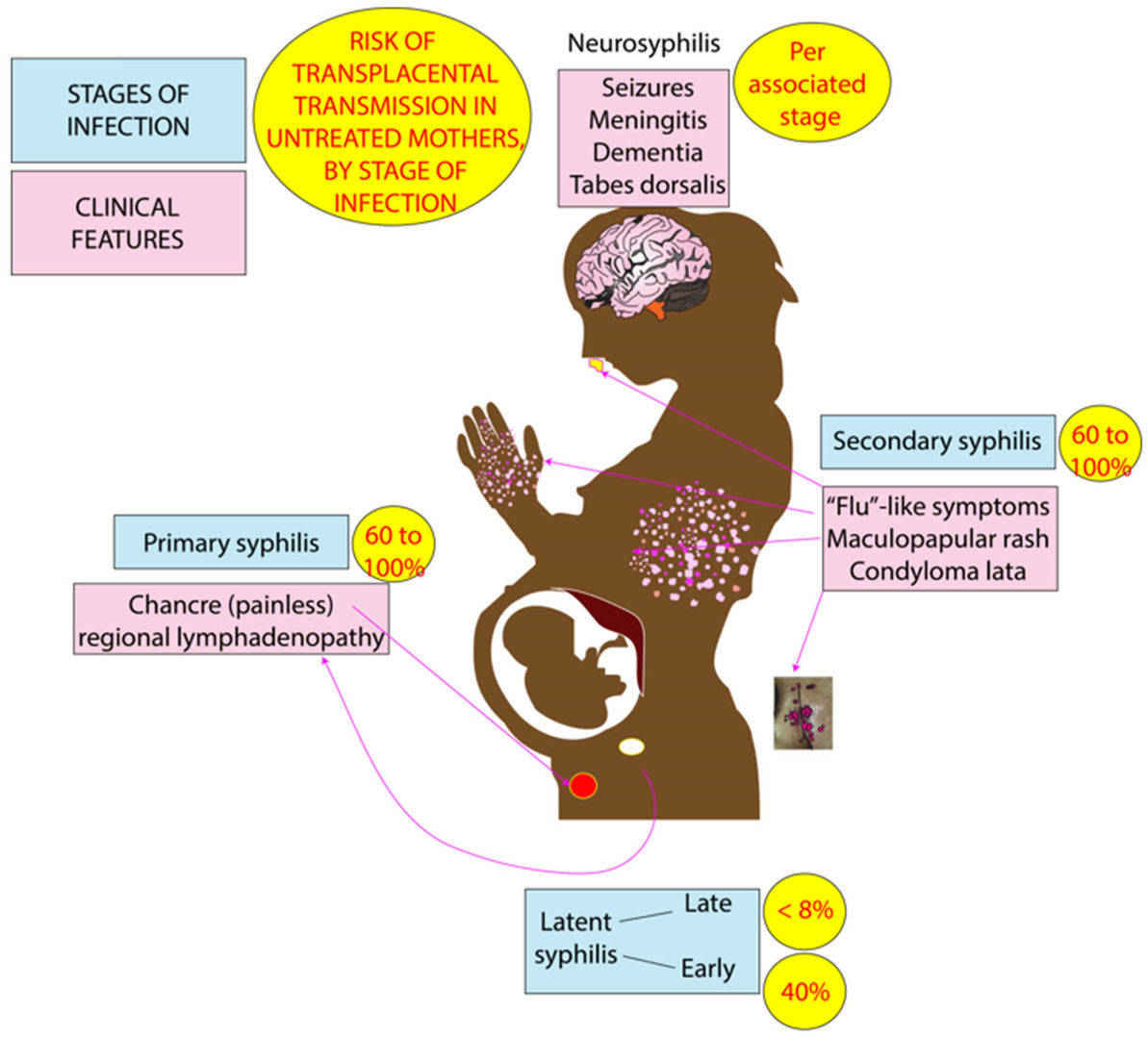 Fig.1 Clinical features of perinatal syphilis and risk of maternal-to-fetal transmission. (Sankaran D, et al., 2023)
Traditional Diagnostic Methods for Syphilis
Traditional diagnostic methods for syphilis involve a combination of clinical evaluation and serological testing. Here's a detailed look at the traditional diagnostic methods:
Clinical Evaluation
Clinical evaluation involves a thorough physical examination and detailed patient history to identify signs and symptoms consistent with syphilis. This method is particularly important in recognizing the characteristic stages of syphilis, such as a painless chancre in primary syphilis, a skin rash and mucous membrane lesions in secondary syphilis, and neurological or cardiovascular complications in tertiary syphilis.
Serological Testing
Serological testing is the cornerstone of syphilis diagnosis and includes both non-treponemal and treponemal tests. Non-treponemal tests (e.g., VDRL and RPR) detect antibodies that are not specific to Treponema pallidum but are produced as a result of cellular damage caused by the infection. These tests are useful for initial screening and monitoring treatment response. Treponemal tests (e.g., FTA-ABS and TPPA) detect antibodies specific to T. pallidum and are used to confirm infection.
Microscopic Examination
Microscopic examination, particularly dark-field microscopy, allows for the direct visualization of Treponema pallidum from lesion exudates or tissue samples. This method is especially useful during the primary and secondary stages when lesions are present. While this method provides immediate results and confirms active infection, it requires specialized equipment and expertise, and is less effective in detecting bacteria in oral or rectal lesions due to the presence of non-pathogenic treponemes.
Polymerase Chain Reaction (PCR)
PCR is a molecular technique that amplifies specific DNA sequences of Treponema pallidum, enabling the detection of even minute quantities of bacterial genetic material. PCR can be performed on various specimen types, including lesion fluid, cerebrospinal fluid, and blood. Although not yet widely used in routine clinical settings due to cost and standardization issues, PCR is a powerful tool for research and complex diagnostic cases.
Cutting-Edge Diagnostic Techniques for Syphilis
As syphilis continues to re-emerge globally, there's an increasing need for faster, more accurate, and point-of-care diagnostic tools. While traditional methods like serology and microscopy remain essential, recent advancements in molecular biology, microfluidics, and biosensor technology have introduced innovative diagnostic approaches. These new techniques aim to overcome limitations such as false negatives in early infection, inability to distinguish active from past infection, and the need for laboratory infrastructure.
| Parameter |
Treponema pallidum Particle Agglutination (TPPA) |
Real-Time PCR (qPCR) |
Point-of-Care (POC) Rapid Tests |
Biosensor-based Diagnostics |
| Sensitivity |
~85–100% |
>95% (primary/early syphilis) |
85–94% |
~95–100% (in early studies) |
| Specificity |
>95% |
>98% |
~95–98% |
>98% |
| Detection Time |
1–2 hours |
1–3 hours |
15–20 minutes |
~10–30 minutes |
| Applicable Settings |
Hospitals, STD clinics, reference labs |
Research labs, high-complexity clinical labs |
Remote areas, mobile clinics, low-resource settings |
Future POC, wearable tech, smart devices |
| Advantages |
High specificity; confirms infection; widely used |
Quantitative; highly sensitive and specific; detects T. pallidum DNA directly |
Detects both treponemal and non-treponemal antibodies; portable; no lab needed |
Ultra-sensitive; rapid; potential for miniaturization and integration with smartphones |
| Limitations |
Cannot distinguish active from past infection; lab infrastructure needed |
Requires expensive equipment; false negatives in latent stages; not widely available |
Lower sensitivity in early infection; limited shelf life; qualitative results |
Still experimental; not clinically approved; requires further validation for real-world use |
Biomarkers for Syphilis Diagnostics
Biomarkers play a crucial role in the diagnosis, staging, prognosis, and treatment monitoring of infectious diseases such as syphilis. The following are some common and emerging biomarkers used in syphilis diagnosis:
- Anti-Treponemal IgM/IgG: IgM indicates recent or congenital infection; IgG indicates past or current infection.
- Cytokines (e.g., IL-6, TNF-α, IFN-γ): Potential stage-specific markers; may help differentiate active vs. latent syphilis.
- T. pallidum DNA (polA, tpp47 genes): Used in PCR-based detection, especially helpful in early or congenital syphilis.
- CXCL13 (C-X-C motif chemokine ligand 13): Highly sensitive for neurosyphilis diagnosis when measured in CSF.
- Lipid Biomarkers (e.g., cardiolipin): Basis for non-treponemal tests like RPR and VDRL; used for monitoring treatment response.
Future of Syphilis Diagnostics
The future of syphilis diagnosis aims to overcome these limitations through the development and widespread implementation of rapid, accurate, and accessible point-of-care (POC) tests, including self-testing options, which can significantly reduce diagnostic delays and improve linkage to care, particularly in underserved populations and high-prevalence areas. Additionally, advancements in nucleic acid amplification tests (NAATs) hold promise for direct detection of Treponema pallidum with higher sensitivity, potentially allowing for earlier and more definitive diagnoses.
Alta DiagnoTech offers a one-stop solution for in vitro syphilis diagnostics, encompassing a range of products including syphilis rapid test kits, TP ELISA kits, TP/RPR rapid test kits and more. If you have related needs, please feel free to contact us for more information or product support.
Reference
- Sankaran D, Partridge E, Lakshminrusimha S. Congenital syphilis—an illustrative review[J]. Children, 2023, 10(8): 1310.
This article is for research use only. Do not use in any diagnostic or therapeutic application.