Allele-Specific PCR Using Fluorescent Probes: Guidelines for Primer Design in Genotyping Applications
Genetic variation lies at the heart of biological diversity, influencing everything from physical traits to disease susceptibility. Among the various forms of genetic variation, Single Nucleotide Polymorphisms (SNPs) stand out as the most abundant and versatile markers. SNPs are single base-pair differences scattered throughout the genome, occurring approximately once every 300 base pairs in humans. These minute variations can have profound effects on gene function, protein structure, and ultimately, phenotypic expression.
The detection and analysis of SNPs are crucial for understanding genetic predispositions to diseases, predicting drug responses, and advancing personalized medicine. Traditional methods such as whole-genome sequencing provide comprehensive genomic information but are often cost-prohibitive and time-consuming for targeted studies. This has led to the development of more efficient and cost-effective techniques, with Allele-Specific PCR (AS-PCR) using TaqMan probes emerging as a leading method for SNP genotyping.
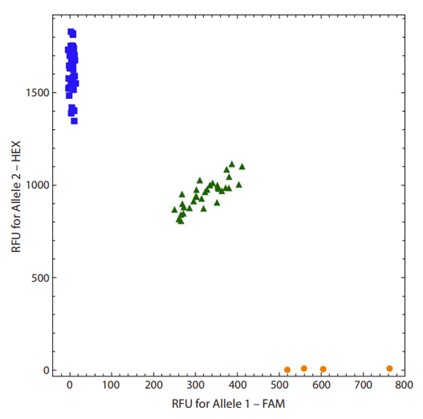 Fig.1 A high-quality allelic discrimination plot. (Devyatkin V. A., et al., 2024)
Principles of Allele-Specific PCR with TaqMan Probes
Real-Time PCR and Fluorescent Probes
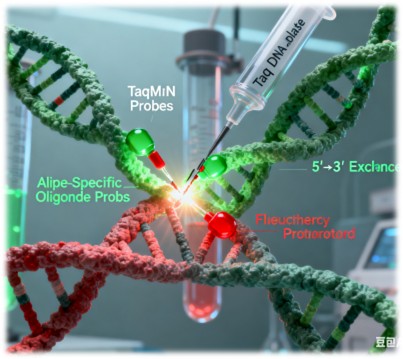
Allele-Specific PCR with TaqMan probes is a real-time PCR technique that enables the simultaneous amplification and detection of specific alleles. The method relies on the use of two allele-specific oligonucleotide probes, each labeled with a distinct fluorescent dye. These probes are designed to hybridize adjacent to the SNP site, with one probe complementary to the wild-type allele and the other to the mutant allele.
During PCR amplification, the Taq DNA polymerase extends the primers, and upon encountering the TaqMan probe, its 5'→3' exonuclease activity cleaves the probe, releasing the fluorescent reporter dye. The intensity of the fluorescence signal is proportional to the amount of PCR product generated, allowing for real-time monitoring of the reaction.
Allele Discrimination Mechanism
The key to allele discrimination lies in the specificity of probe hybridization. Probes are designed to have a higher melting temperature (Tm) when fully complementary to their target allele compared to when a mismatch exists. This difference in Tm ensures that only the fully complementary probe hybridizes efficiently, leading to the release of its fluorescent dye. In contrast, the probe with a mismatch remains largely intact, resulting in minimal fluorescence.
By comparing the fluorescence intensities of the two dyes, it is possible to determine the genotype of the sample. Homozygous samples will exhibit high fluorescence for only one dye, while heterozygous samples will show intermediate fluorescence levels for both dyes.
Advantages of Allele-Specific PCR with TaqMan Probes
High Specificity and Sensitivity
One of the primary advantages of AS-PCR with TaqMan probes is its high specificity and sensitivity. The method can accurately distinguish between alleles differing by a single nucleotide, even in complex genomic backgrounds. This is achieved through careful probe design, ensuring optimal hybridization conditions and minimizing non-specific binding.
Rapid and Cost-Effective
Compared to whole-genome sequencing, AS-PCR with TaqMan probes is a rapid and cost-effective method for SNP genotyping. The technique requires minimal sample preparation and can be performed in a high-throughput manner, making it suitable for large-scale genetic studies. Additionally, the use of fluorescently labeled probes eliminates the need for post-PCR processing, further streamlining the workflow.
Versatility and Scalability
AS-PCR with TaqMan probes is highly versatile and can be adapted to various genetic markers and sample types. The method is compatible with DNA extracted from a wide range of sources, including blood, tissue, and saliva. Furthermore, the scalability of the technique allows for the simultaneous analysis of multiple SNPs, facilitating comprehensive genetic profiling.
Practical Considerations in Probe Design and Optimization
- Probe Design Criteria
The success of AS-PCR with TaqMan probes hinges on the careful design of primers and probes. Key considerations include:
GC Content: Maintain a GC content between 30-80% (ideally 40-60%) to ensure stable hybridization.
- Melting Temperature (Tm): Aim for a Tm difference of at least 4-5°C between the fully complementary and mismatched probes to facilitate efficient allele discrimination.
- Probe Length: Keep probe lengths between 18-30 nucleotides, with an optimal length of 20 nucleotides, to balance specificity and sensitivity.
- Avoidance of Secondary Structures: Check for potential secondary structures in primers and probes using tools like OligoAnalyzer to prevent non-specific binding.
- Use of Locked Nucleic Acid (LNA) Modifications
Locked Nucleic Acid (LNA) modifications can enhance the performance of TaqMan probes by increasing their binding affinity and specificity. LNAs are RNA analogs with a locked sugar conformation, resulting in higher thermal stability and improved mismatch discrimination. By incorporating LNA bases into the probe sequence, it is possible to shorten the probe length while maintaining or even improving allele discrimination capabilities.
- Optimization of PCR Conditions
Optimizing PCR conditions is crucial for achieving reliable and reproducible results. Key parameters to consider include:
- Annealing Temperature: Select an annealing temperature approximately 5°C lower than the lower Tm of the two primers to ensure efficient primer binding.
- Primer and Probe Concentrations: Optimize primer and probe concentrations to maximize amplification efficiency and minimize non-specific binding.
- Cycle Number: Determine the optimal number of PCR cycles to avoid plateau effects and ensure accurate quantification.
Applications of Allele-Specific PCR with TaqMan Probes
- Disease Association Studies
AS-PCR with TaqMan probes is widely used in disease association studies to identify SNPs linked to specific diseases. By genotyping large cohorts of affected and unaffected individuals, researchers can uncover genetic risk factors and develop targeted therapies. For example, SNPs in the BRCA1 and BRCA2 genes have been associated with an increased risk of breast and ovarian cancer, leading to the development of genetic tests for these markers.
- Pharmacogenomics
Pharmacogenomics aims to understand how genetic variations influence drug responses. AS-PCR with TaqMan probes enables the rapid and accurate genotyping of SNPs known to affect drug metabolism, efficacy, and toxicity. This information can guide personalized drug prescribing, optimizing therapeutic outcomes and minimizing adverse reactions. For instance, genotyping for CYP2C19 polymorphisms can predict clopidogrel resistance, allowing for alternative antiplatelet therapy in high-risk patients.
- Agricultural Biotechnology
In agricultural biotechnology, AS-PCR with TaqMan probes is used for marker-assisted selection (MAS) and genetic engineering. By identifying SNPs associated with desirable traits such as disease resistance, yield, and quality, breeders can accelerate the development of improved crop varieties. Additionally, the technique facilitates the precise introduction of transgenic traits, ensuring the stability and heritability of the desired characteristics.
If you have related needs, please feel free to contact us for more information or product support.
Reference
- Devyatkin, V. A., et al. "Allele-specific PCR with fluorescently labeled probes: criteria for selecting primers for genotyping." Vavilov Journal of Genetics and Breeding 28.3 (2024): 351.
This article is for research use only. Do not use in any diagnostic or therapeutic application.