A Humanized Mouse Model Featuring Markedly Enhanced Class-Switched, Antigen-Specific Antibody Responses

  • Home
  • Resource
  • Explore & Learn
  • A Humanized Mouse Model Featuring Markedly Enhanced Class-Switched, Antigen-Specific Antibody Responses


A Humanized Mouse Model Featuring Markedly Enhanced Class-Switched, Antigen-Specific Antibody Responses

Humanized mouse models have emerged as indispensable tools in immunological research, bridging the gap between mouse and human immune systems. These models involve the engraftment of human immune cells or tissues into immunodeficient mice, enabling the study of human immune responses in a controlled, in vivo environment. The quest for more physiologically relevant models has driven the development of sophisticated humanized mouse strains, with the incorporation of human cytokines playing a pivotal role.

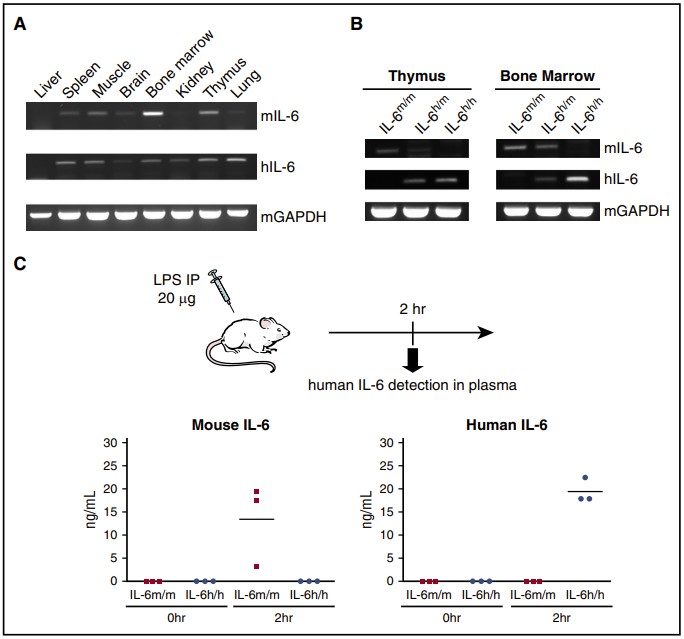
Confirmation of human IL-6 expression in knock-in mouse models. Fig.1 Validation of human IL-6 expression in knock-in mice. (Yu H., et al., 2017)
The Importance of Cytokines in Immune Function

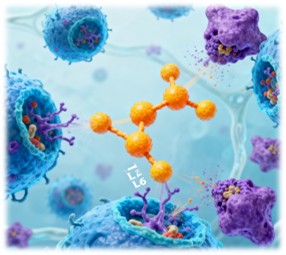
Cytokines are small proteins that play crucial roles in regulating immune responses. They act as messengers between cells, orchestrating the complex interplay of immune cells during inflammation, infection, and tissue repair. Among these, interleukin-6 (IL-6) stands out for its multifaceted role in both innate and adaptive immunity. IL-6 is involved in B-cell differentiation, T-cell activation, and the acute-phase response, making it a key player in the immune system's ability to combat pathogens and maintain homeostasis.

The Limitations of Conventional Humanized Mouse Models

Despite their utility, conventional humanized mouse models have limitations, particularly in generating robust, antigen-specific antibody responses. One major challenge has been the inefficient class-switching from IgM to IgG antibodies, a process critical for the development of high-affinity, long-lasting immunity. This limitation stems, in part, from the lack of adequate human cytokine support, particularly IL-6, which is essential for B-cell maturation and antibody production.

The Advent of Human IL-6 Knock-In Mouse Models

To overcome these limitations, researchers have developed human IL-6 knock-in mouse models. These models involve the insertion of the human IL-6 gene into the mouse genome, replacing the mouse IL-6 gene. This genetic modification ensures the physiological expression of human IL-6, which is crucial for the proper differentiation and function of human immune cells engrafted in the mice.

  • Construction of Human IL-6 Knock-In Mice
    The construction of human IL-6 knock-in mice involves sophisticated genetic engineering techniques. Researchers utilize VelociGene technology to precisely replace the mouse IL-6 gene with its human counterpart, while maintaining the regulatory elements of the mouse gene. This ensures that human IL-6 is expressed in a spatially and temporally appropriate manner, mimicking natural physiological conditions.
  • Enhanced T-Cell Engraftment and Thymopoiesis
    One of the immediate benefits observed in human IL-6 knock-in mice is enhanced thymopoiesis and peripheral T-cell engraftment. Human IL-6 promotes the proliferation and survival of thymocytes, leading to a larger and more functional thymus. This, in turn, results in increased numbers of mature T cells in the periphery, which are essential for orchestrating immune responses.
  • Improved B-Cell Maturation and Antibody Production
    Human IL-6 also plays a critical role in B-cell maturation and antibody production. In human IL-6 knock-in mice, B cells exhibit enhanced differentiation into immunoglobulin-secreting plasma cells. This leads to increased levels of total IgG and antigen-specific IgG antibodies, a significant improvement over conventional humanized mouse models.

Evidence of Enhanced Immune Responses in Human IL-6 Knock-In Mice

Robust Antigen-Specific Antibody Responses

Studies have demonstrated that human IL-6 knock-in mice generate robust antigen-specific antibody responses. Upon immunization with ovalbumin (OVA), these mice produce high levels of OVA-specific IgG antibodies. This is in stark contrast to conventional humanized mouse models, which often fail to produce significant amounts of antigen-specific IgG.

Diverse Antibody Repertoire and Somatic Hypermutation

The antibodies produced in human IL-6 knock-in mice exhibit a diverse repertoire and high frequency of somatic hypermutation. This indicates efficient B-cell activation and selection, processes that are critical for the generation of high-affinity antibodies. The presence of somatic hypermutation suggests that human IL-6 supports the germinal center reaction, where B cells undergo affinity maturation.

Polyreactivity and Cross-Reactivity

Interestingly, a subset of antibodies cloned from IgG-switched B cells in human IL-6 knock-in mice displayed polyreactivity, binding to multiple antigens with low affinity. This feature, reminiscent of antibodies found in healthy donors, may confer broad antibacterial activity. The ability to produce polyreactive antibodies highlights the versatility of the human IL-6 knock-in mouse model in mimicking human immune responses.

Practical Applications and Future Directions

  • Vaccine Development and Testing
    The human IL-6 knock-in mouse model holds great promise for vaccine development and testing. By providing a more physiologically relevant platform, researchers can evaluate the efficacy and safety of novel vaccines in a controlled environment. This is particularly valuable for vaccines targeting emerging infectious diseases, where rapid development and testing are crucial.
  • Immunotherapy Research
    The model also offers opportunities for immunotherapy research. By studying the interactions between human immune cells and tumor cells in human IL-6 knock-in mice, researchers can gain insights into the mechanisms underlying immune evasion and develop strategies to enhance anti-tumor immunity. This could lead to the development of more effective immunotherapies for cancer patients.
  • Future Refinements and Optimizations
    While the human IL-6 knock-in mouse model represents a significant advancement, further refinements are needed to fully recapitulate human immune function. Incorporating additional human cytokines and immune-related genes could enhance the model's utility. Additionally, optimizing the interactions between T cells and B cells, as well as the development of follicular dendritic cells, could lead to more robust germinal center reactions and antibody responses.

If you have related needs, please feel free to contact us for more information or product support.

Reference

  1. Yu, Hua, et al. "A novel humanized mouse model with significant improvement of class-switched, antigen-specific antibody production." Blood, The Journal of the American Society of Hematology 129.8 (2017): 959-969.

This article is for research use only. Do not use in any diagnostic or therapeutic application.

Get in Touch
0
0

There is no product in your cart.